

















Securing FIBCs (Big Bags): Essential Techniques
- Karine Morel
- [wpcode id="48710"]
Table of content
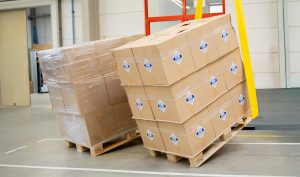
VDI 2700 Blatt 18: preventing FIBC slippage and tipping.
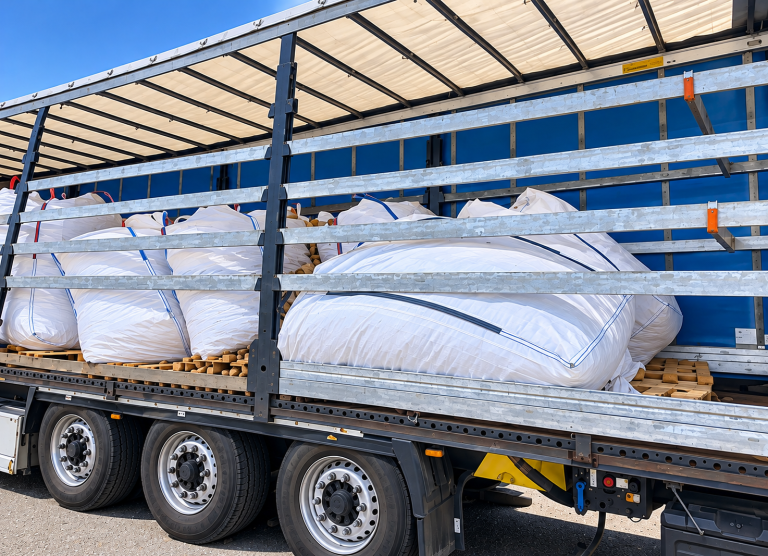
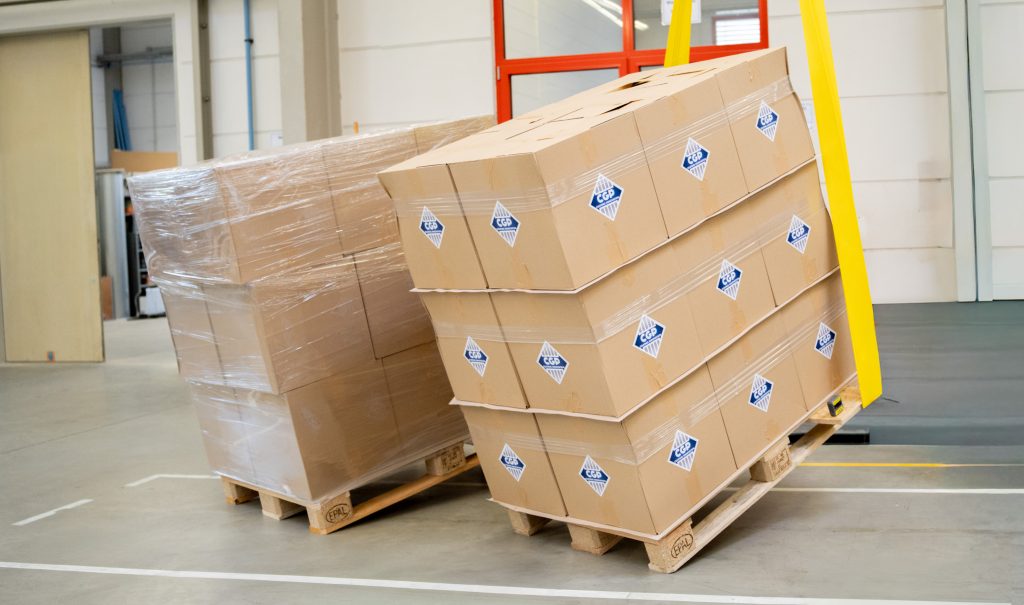
To secure FIBCs properly, each bag must be kept in place on its pallet, and the loads must be blocked inside the truck.
These flexible containers can change shape during transit. Braking can therefore cause the load to shift.
VDI 2700 Blatt 18 was published in April 2026. It covers the transport of bulk materials in flexible packaging bags and specifies load-securing requirements.
1- Why is securing FIBCs so challenging?
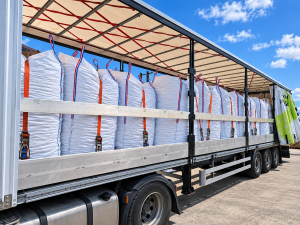
An FIBC (Flexible Intermediate Bulk Container), commonly known as a Big Bag, is a large industrial bag designed for powders and granules. These transport bags are used in the chemical, agricultural and food industries.
They are often made from woven polypropylene.
Packaging that shifts during transit
Unlike a rigid box, a flexible container can change shape.
Several risks may arise:
Settling: the contents compact.
Deformation: the sides bulge outward.
Slippage: the bag moves on its pallet.
Tipping: the load loses its balance.
Loss of tension: the straps become loose.
What are the risks for industrial companies?
An unstable FIBC can damage products and make unloading dangerous.
In addition, load movements can cause delays and loss of goods.
2- What does the VDI 2700 Blatt 18 guideline cover?
The VDI 2700 Blatt 18:2026-04 guideline addresses the securing of flexible packaging bags during road transport.
This German technical standard is not automatically mandatory throughout Europe.
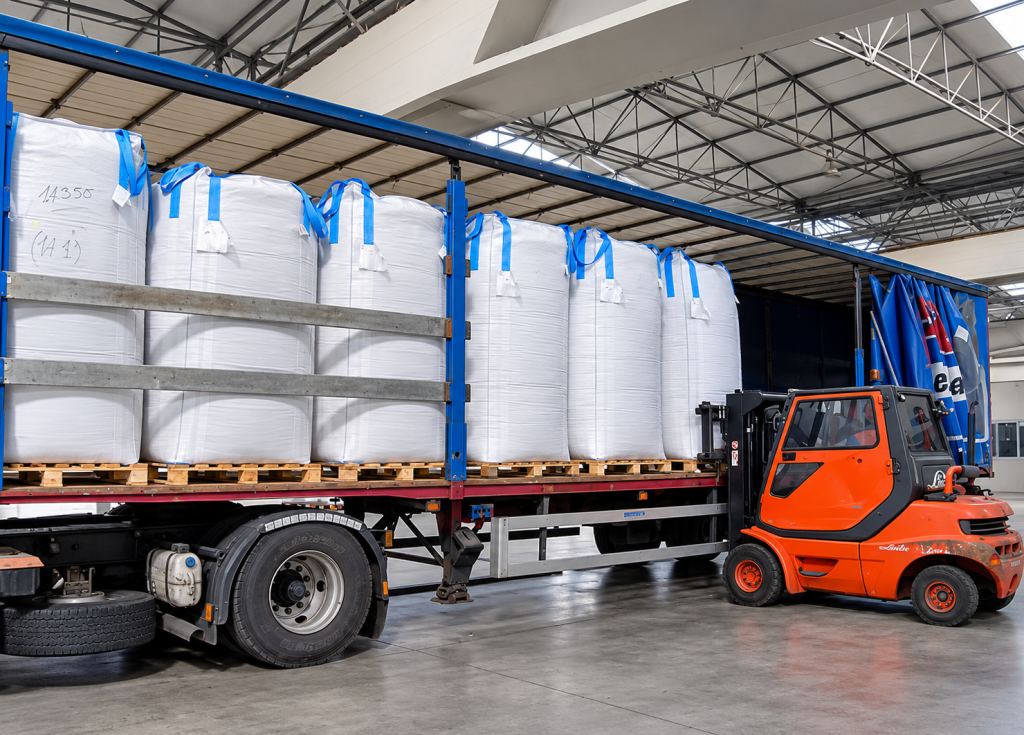
Ensuring pallet stability before loading
The bag and its pallet must form a stable unit.
The pallet must be strong enough and suitable for the application. The FIBC must also be properly centred.
Minimising gaps between loads
The guideline emphasises the importance of blocking bulk loads.
It also covers the formation of compartments, known as Kammerbildung in German. This allows FIBCs to be grouped together into blocks.
However, the supporting structures must be sufficiently strong.
Two friction coefficients to monitor
Friction must be assessed between the bag and the pallet, and then between the pallet and the truck floor.
Some configurations specify:
µ ≥ 0.5 between the bag and the pallet.
µ ≥ 0.6 between the pallet and the floor.
These values must be confirmed against the conditions specified in the guideline.
3- How can FIBC stability be improved?
The weight, shape and contents of the bag must be assessed.
A robust bulk packaging solution may behave differently depending on the products being transported.
Check the load characteristics
Before selecting a bag or a load-securing solution, check:
The product and its weight.
The pallet size.
Surface moisture.
The securing methods available.
Storing products before shipment can also affect the condition of the contact surfaces.
Choose the right securing methods
| Solution | Function |
|---|---|
| Suitable pallet | Supports the bag |
| Anti-slip material | Reduces slippage |
| Mechanical blocking | Prevents movement |
| Straps | Provides additional restraint |
| Corner protectors | Protects the packaging |
These solutions can be combined.
Why are straps not always enough?
When the contents settle, the bag may lose height.
The straps can then become loose. Appropriate blocking may therefore be necessary.
4- Which anti-slip solutions are available for FIBCs?
CGP COATING INNOVATION offers two solutions that work at different points in the load-securing system.
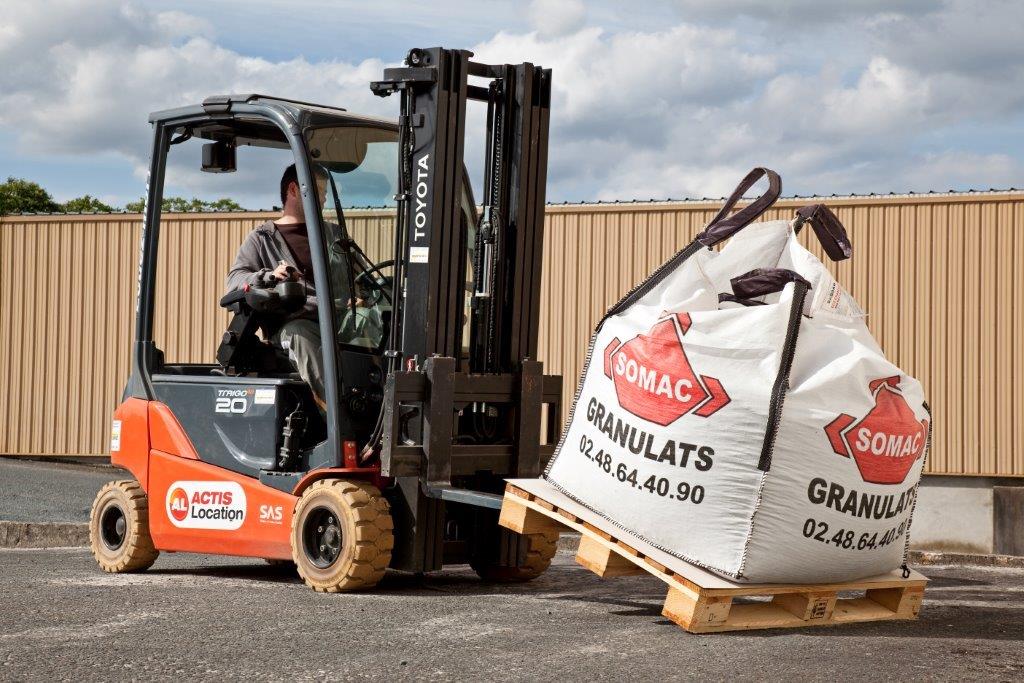
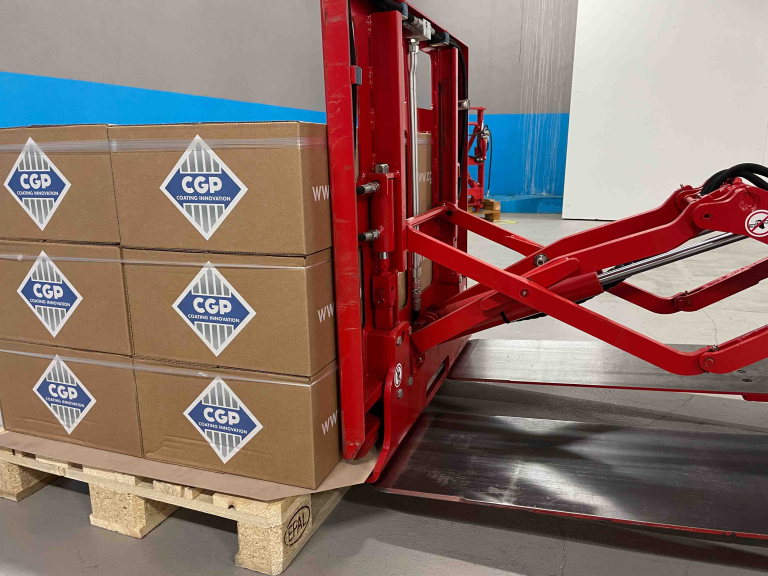
STABUSTOP®: stabilising the FIBC on its pallet
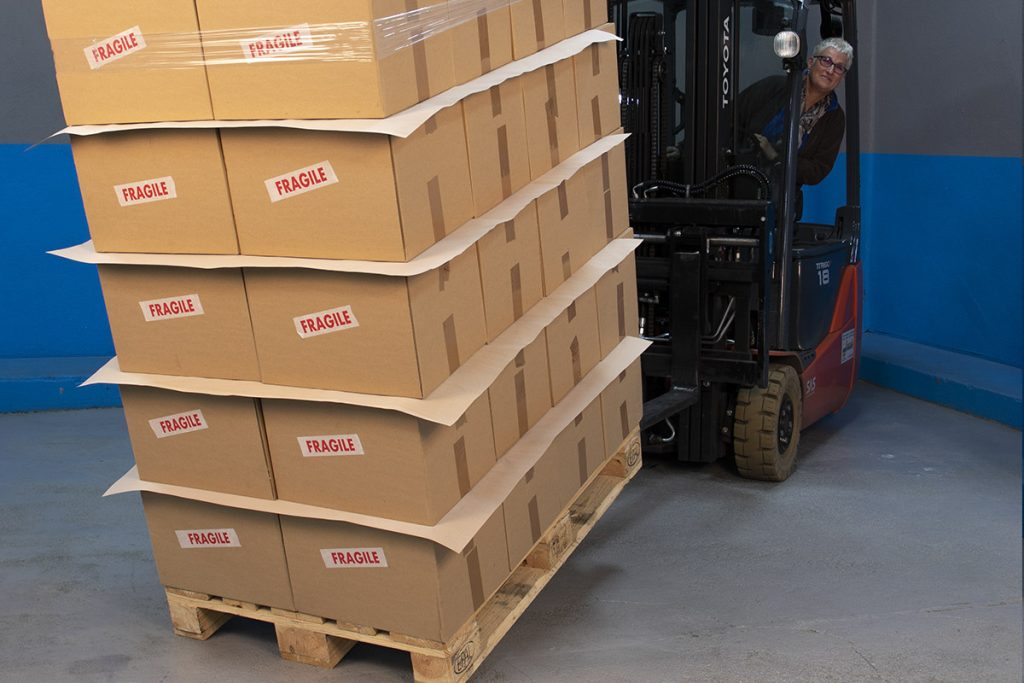
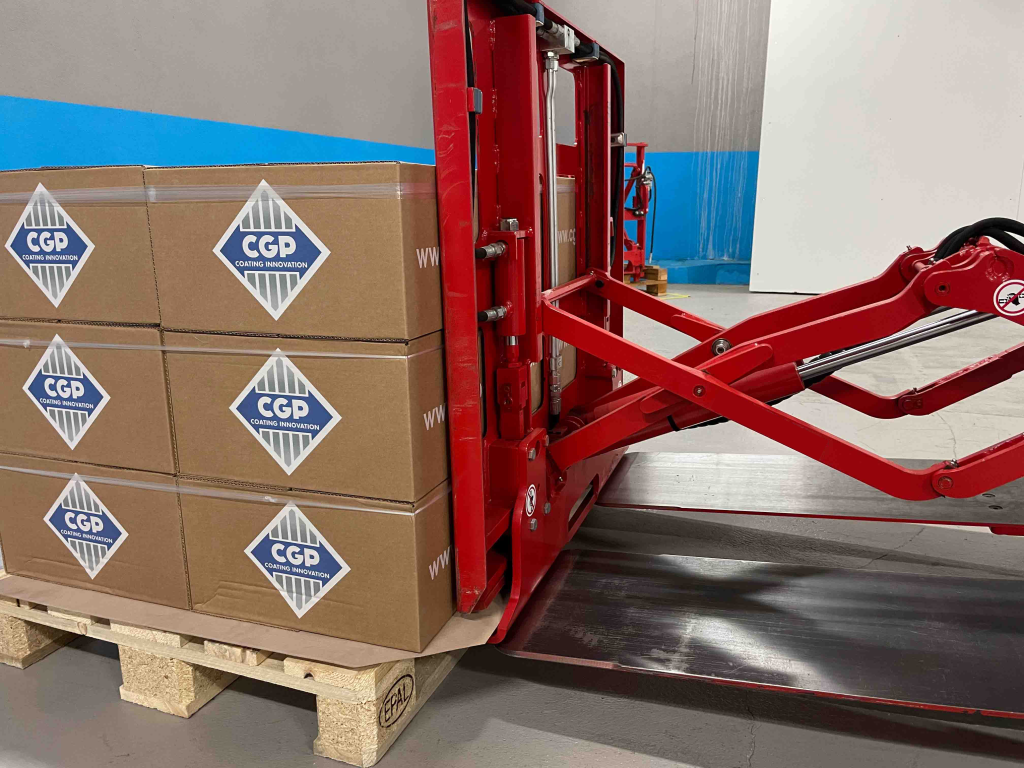
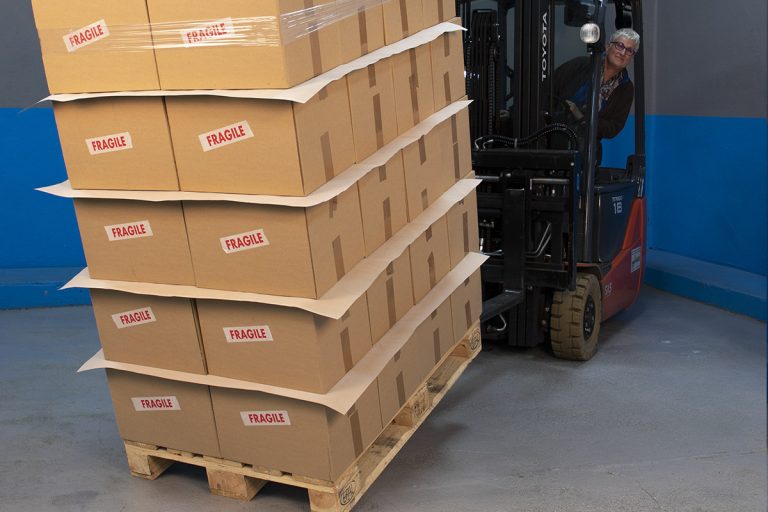
STABUSTOP® is a high-performance anti-slip slip sheet.
Placed between the bag and the pallet, it is designed to reduce FIBC movement.
Its effectiveness must be verified according to the contact surfaces involved.
STABUMAX®: reducing pallet slippage inside the truck
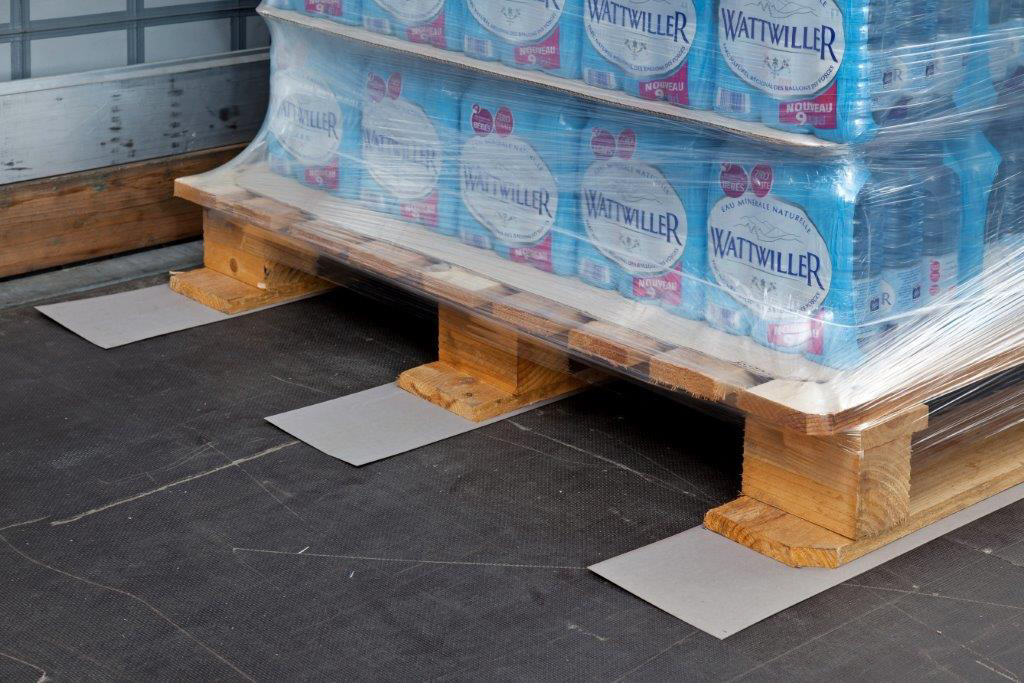
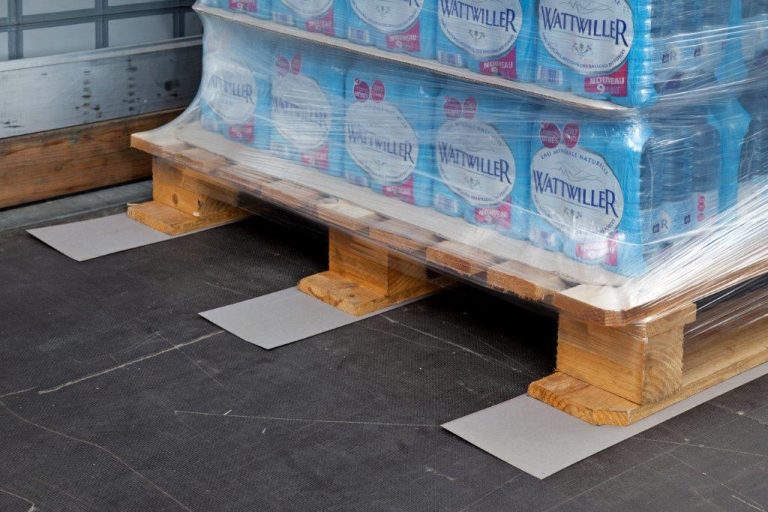
STABUMAX® is an anti-slip load-securing mat.
Placed between the pallet and the truck floor, it improves resistance to slippage.
It complements blocking systems without replacing them.
Two solutions for two potential slipping points
STABUSTOP®: between the FIBC and the pallet.
STABUMAX®: between the pallet and the truck floor.
This approach can be used when transporting bulk products and reusable industrial bags.
5- How can load safety be verified?
Friction, stability and securing methods must all be checked.
Key validation steps
Identify the contact surfaces.
Measure friction.
Check the bag’s stability.
Select the appropriate blocking method.
Test the load.
These checks help improve the safety of goods in transit.
6- What best practices should you follow?
Check the pallet and the bag before departure.
Also check for gaps and verify the securing methods in place.
Finally, keep records of the test results.
Conclusion : securing FIBCs starts with palletisation
VDI 2700 Blatt 18 highlights that an FIBC can change shape during transit.
Safety therefore depends on a suitable pallet, effective blocking and controlled friction.
STABUSTOP® and STABUMAX® can help reduce slippage at two different levels.
Key takeaways
VDI 2700 Blatt 18 was published in April 2026.
FIBCs can settle or slip during transit.
Friction must be checked at two contact points.
Anti-slip materials complement load-blocking systems.
Testing helps verify performance.
FAQ: Securing FIBCs
Is VDI 2700 Blatt 18 mandatory in France?
No. Its publication does not automatically make it mandatory in France. However, if your goods are transported through Northern Europe, compliance may be required depending on the applicable rules. This German technical guideline can serve as a reference. The requirements depend on the transport operation concerned.
What friction coefficient is required for an FIBC?
Some assessments refer to µ = 0.5 between the bag and the pallet, and µ = 0.6 between the pallet and the truck floor. These values depend on the configuration.
Can straps alone be used?
Not always. The bag may settle, causing the straps to loosen. Appropriate blocking may therefore be necessary.
Where should anti-slip materials be placed?
Between the bag and the pallet, or between the pallet and the truck floor. Each position addresses a different risk.
How can load stability be verified?
The bag, pallet and securing methods must be checked. Measurements or tests can then be used to confirm their effectiveness.
Are your FIBCs slipping on their pallets?
CGP COATING INNOVATION can help you assess STABUSTOP® and STABUMAX® solutions suited to your application.
Request a technical assessment to determine which tests are required.
Our team will help you find the solution that meets your needs.