

















Anti-slip paper or film: how to stabilize a pallet?
- Karine Morel
- [wpcode id="48710"]
Table of content
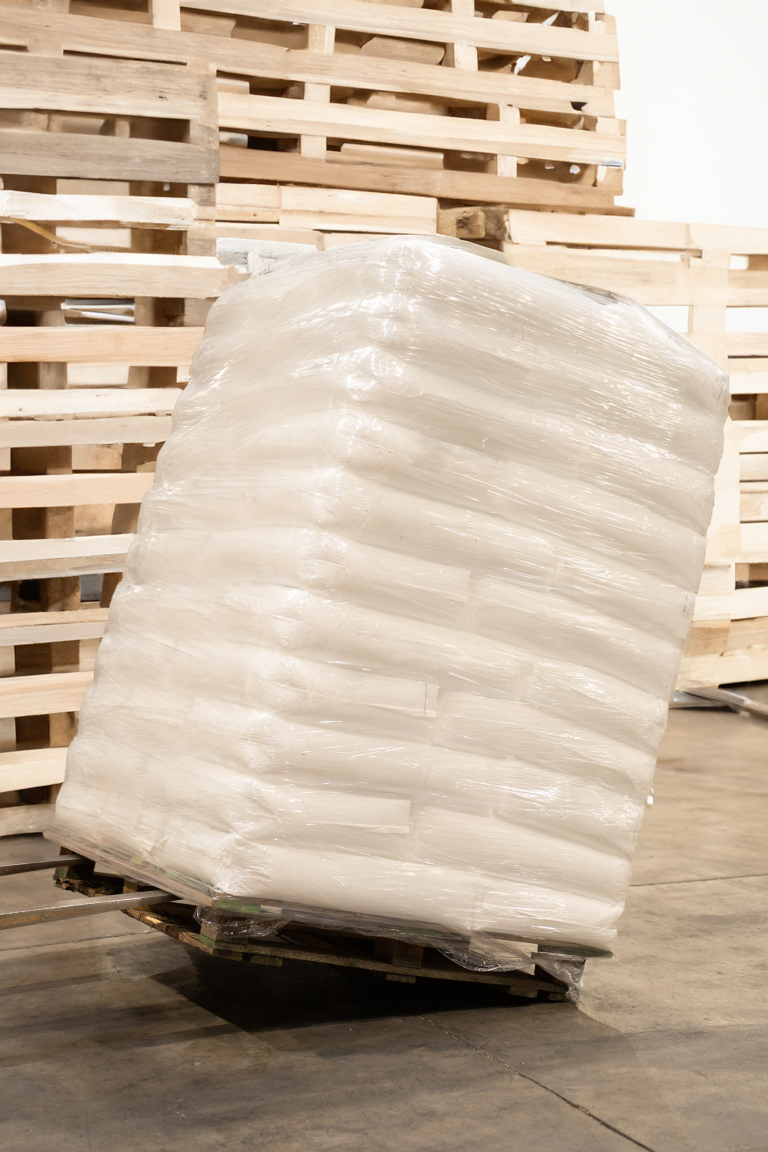
Is a well-wrapped pallet necessarily stable? Under the film, cartons can move, bags can deform and layers can shift.
Stretch film holds the load from the outside. Anti-slip paper limits sliding between layers. Their combination can help reduce the amount of film used, after validation through testing.
The right question is therefore: which combination can stabilize your pallet with an appropriate amount of packaging?
1- Stretch film and anti-slip paper: two different functions
The film applies a holding force around the products. Its effectiveness depends on the film selected, its stretch and the settings of the wrapping machine. The number of wraps alone is not enough to assess this holding force.
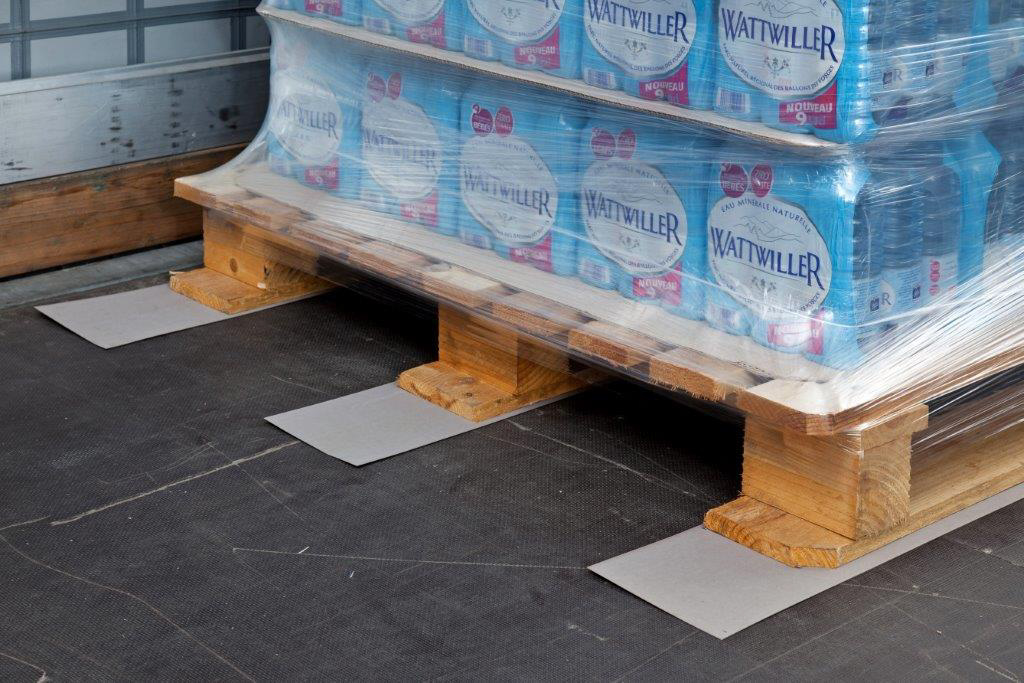
Anti-slip paper increases friction, meaning the resistance to sliding between two surfaces.
Anti-slip paper VS Stretch film
| Comparison point | Stretch film | Anti-slip paper |
|---|---|---|
| Main function | Hold the load from the outside | Limit sliding between layers |
| Application | Around the load | At the base of the pallet and between product layers |
| Parameters to adjust | Film type, tension and number of wraps | Reference, dimensions and position of the sheets |
| Limitation | Does not correct all stacking defects | Does not correct all tipping risks |
Stability also depends on stacking, the pallet and the strength of the packaging.
How to choose a suitable film?
With a wide range of products, the film must be chosen according to the load and the equipment used.
Several types of film exist: manual stretch film, machine film or pre-stretched film. Each requires an appropriate application method. Transparent stretch film allows products and labels to be seen, without prejudging its holding strength.
To compare one range of film with another, measure consumption per pallet. The price of a roll of stretch film is not enough.
2- Before adding film, identify what is moving
The layers are sliding
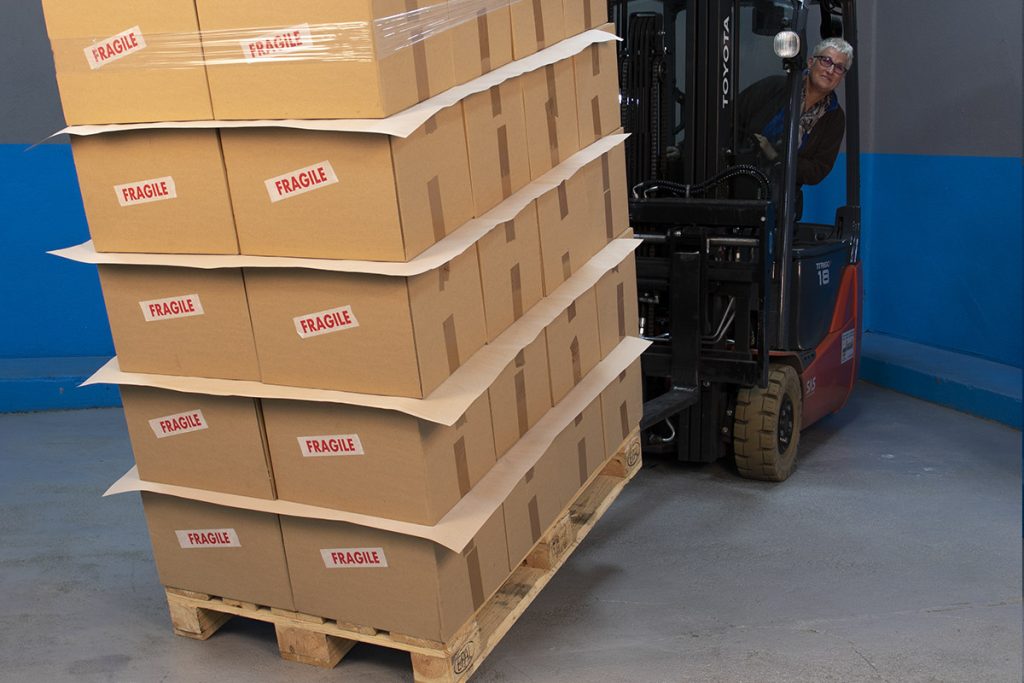
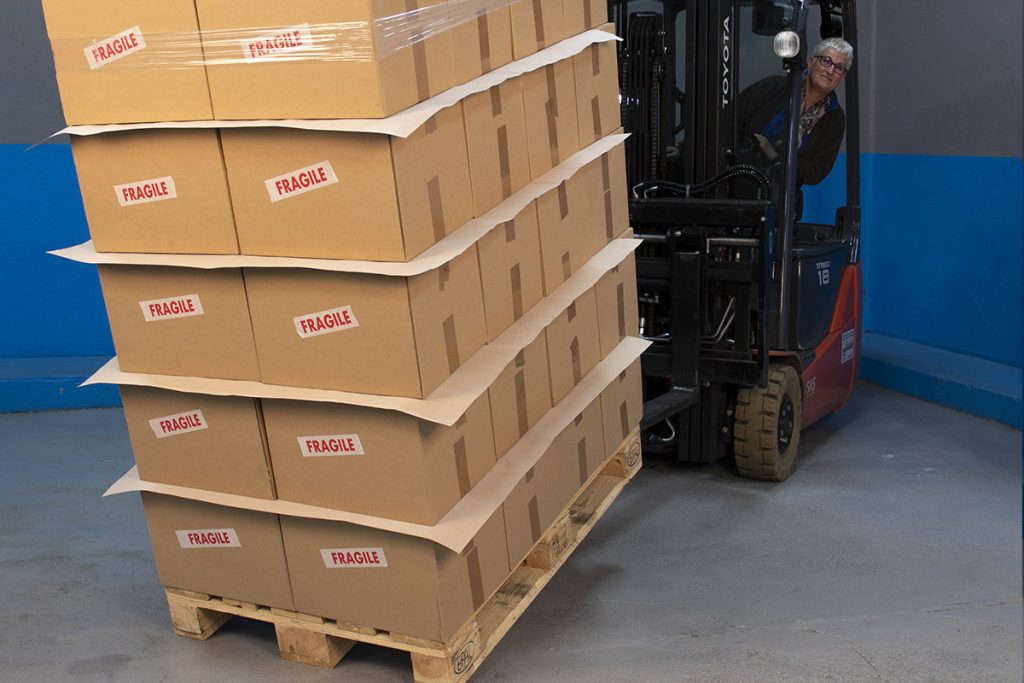
Varnished cartons or certain bags can slide against each other. An anti-slip interlayer can help limit these movements.
For food products as well as chemical products, examine the surface of the bag or carton in contact with the interlayer.
The load leans or tips over
A tall or poorly balanced pallet can tip over, even if the layers slide very little. Check its height, weight distribution and palletizing pattern.
The packaging deforms
Fragile cartons or bags that become compressed can alter the shape of the load. Excessive film tension can also deform the packaging.
3- What role do STABULON® interlayers play?
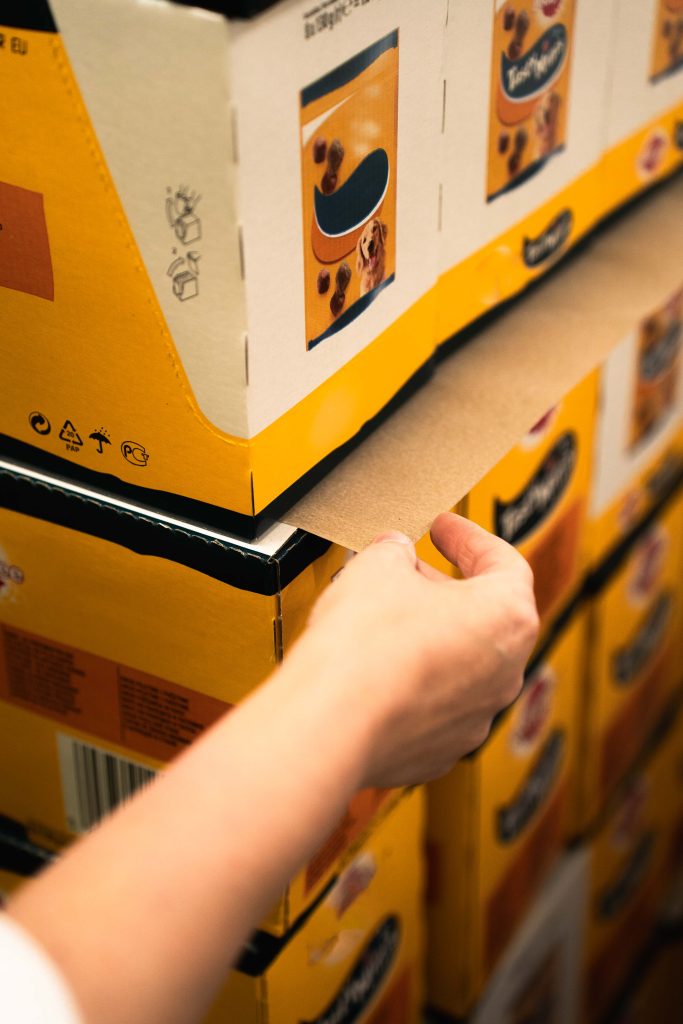
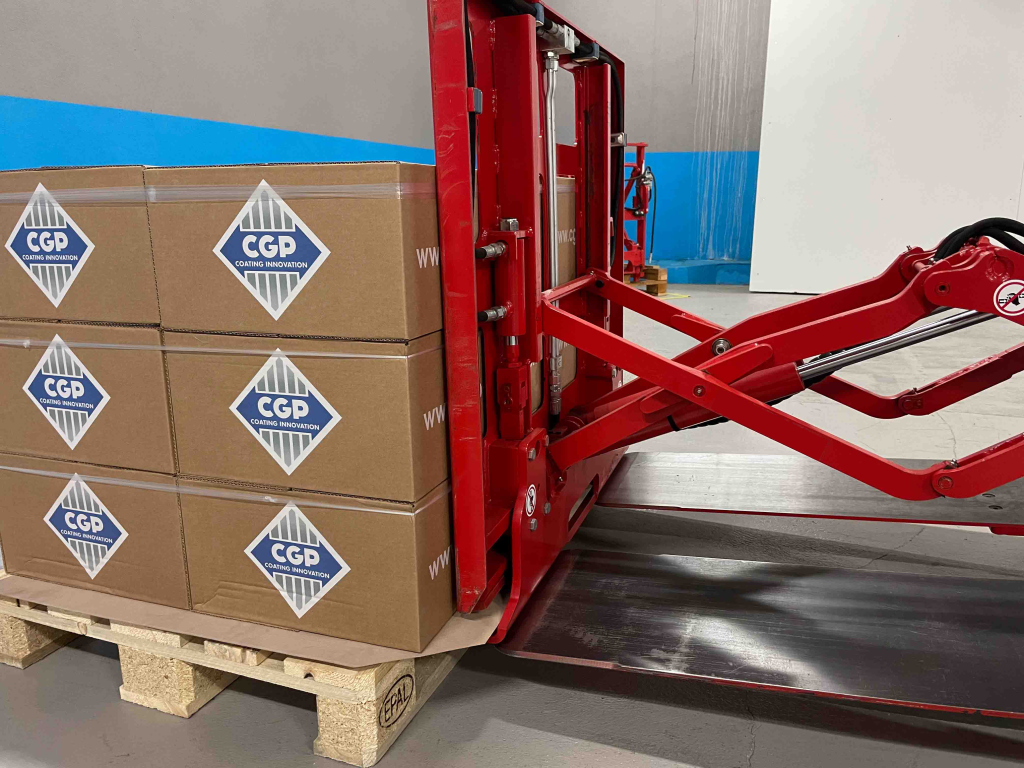
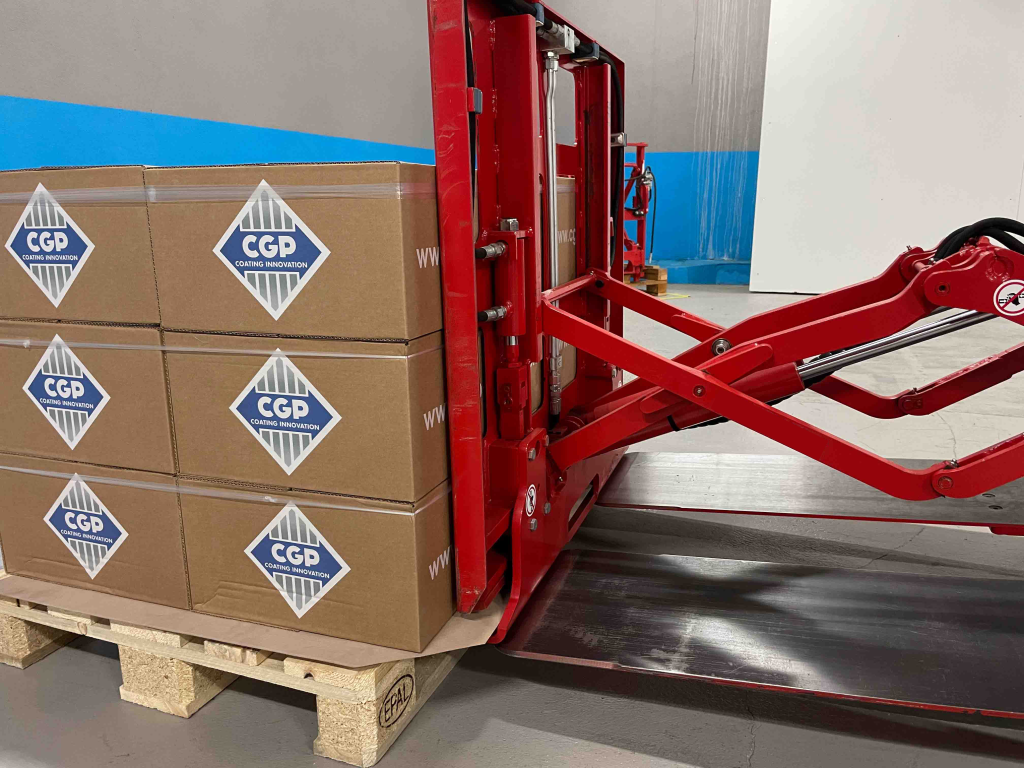
STABULON® anti-slip interlayers from CGP COATING INNOVATION help limit sliding between layers. Several substrates and formats make it possible to adapt the solution to the products.
Consult the STABULON® technical documentation to prepare your choice.
To remain easy to use, the solution must be integrated into the workstation. Check the sheet size, their accessibility and their application method.
Once movements are better controlled, you can test a reduction in film.
4- How to reduce stretch film in four steps?
1. Measure the starting situation
Weigh the film used per pallet. Record the weight and height of the load, the settings and any damage observed.
2. Test the interlayers
Choose a suitable reference and the levels where the sheets should be placed. Initially, keep the other settings unchanged to observe the effect of the interlayers.
3. Adjust the wrapping
If the results allow it, reduce the film gradually. Change one parameter at a time to understand its effect.
4. Validate stability
Test the pallet under conditions close to its actual journey: handling, braking and vibrations. A tilt test does not cover all these situations.
A test on a mobile simulation bench can be very useful. CS-TS provides this service.
Product stability on the pallet and load securing inside the vehicle remain two separate issues.
5- Assess the savings across the entire packaging system
Compare the weight of the film and interlayers, their cost, preparation time and any potential damage.
Less plastic film does not necessarily mean less packaging overall. The environmental assessment must also take the added materials into account.
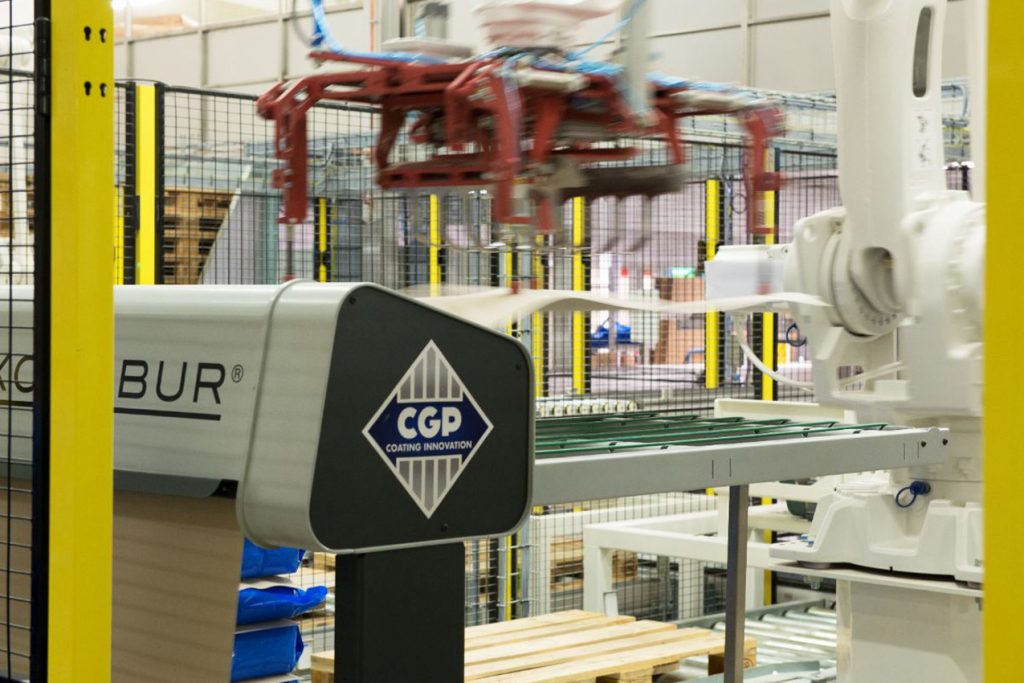
On an automated line, also examine how the sheets are applied. Discover our article on pet food palletizing and its automation.
Frequently asked questions
Can stretch film be eliminated?
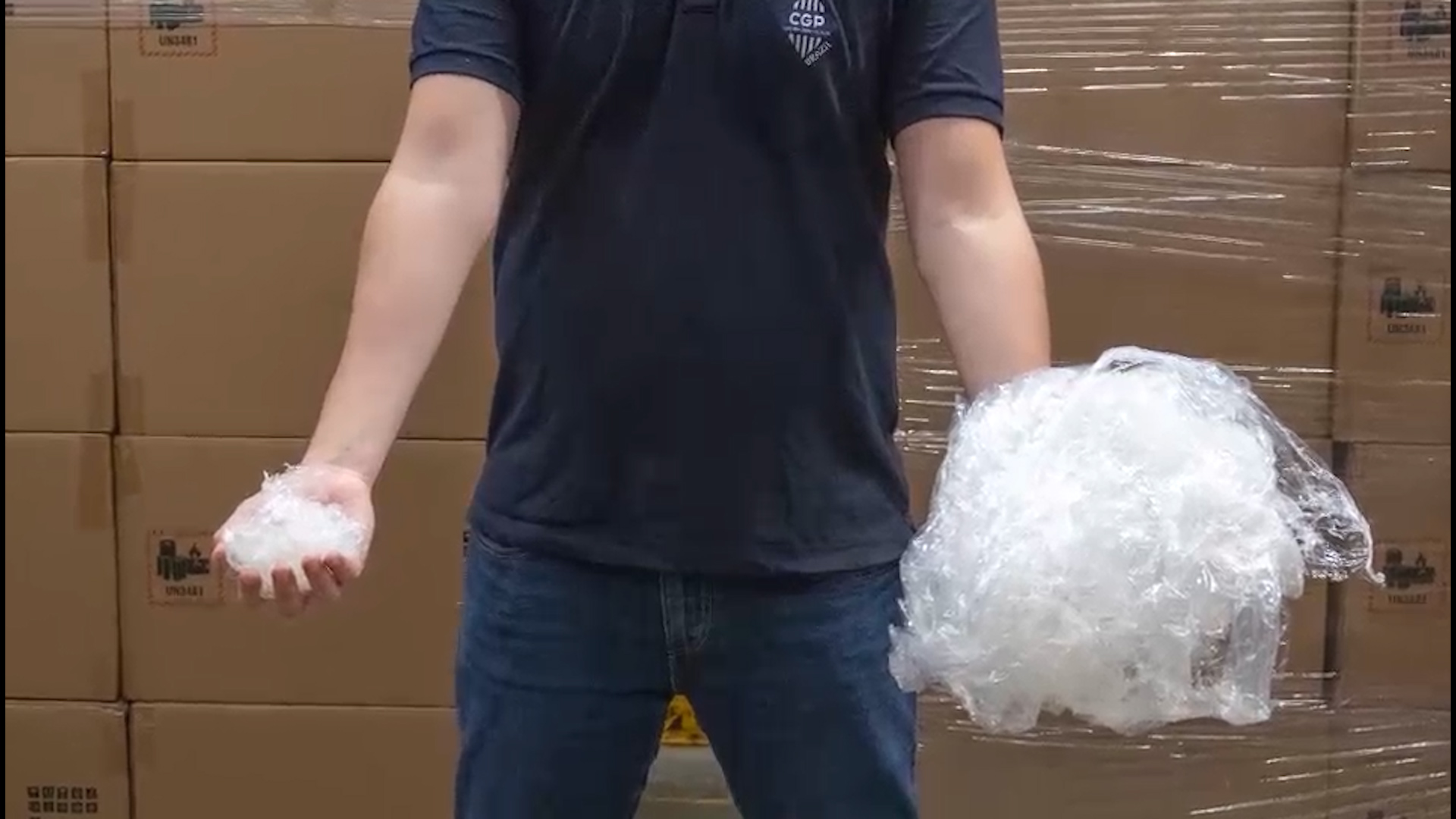
In some internal flows, STABULON® combined with an elastic STABUSTRAP® band can replace the film, after testing our COMBO solution. For automated storage, compatibility with the equipment must also be checked.
For shipments, the reduction depends on the journey and the structure of the load, but eliminating stretch film is not recommended.
Does a thicker film hold the load better?
Not always. Its properties, tension and application method also matter. A thicker film does not correct poor stacking.
What percentage of film can be saved?
There is no universal percentage. The savings must be measured through a before-and-after test, with stability validated. However, savings of 15 to 20% are not uncommon.
Key takeaways
- Anti-slip paper and stretch film perform complementary functions.
- Reducing film requires testing on the actual load.
- The savings must take all consumables and their impact on operations into account.
Would you like to optimize your use of stretch film?
Present your products and logistics flow to the CGP team to define the tests to be carried out with STABULON®.
-
 AQUASTOP® : Papier Hydrophobe pour Protection Maximale09 Jan 2025 Stabiliser
 -
 Stabilisez vos emballages Big-Bag, sécurisez vos transports, optimisez vos coûts08 Juil 2024 Stabiliser
 -
 Stabilisez vos palettes en bois, sécurisez votre transport et optimisez vos coûts de palettisation.08 Juil 2024 Stabiliser
Our team helps you find the solution that meets your needs.