















Reducing Carbon Footprint and Meeting CSR Commitments in Logistics: How to Take Concrete Action in the Warehouse
- Karine Morel
- [wpcode id="48710"]
Table of content
Reducing the carbon footprint in logistics has become a strategic priority for businesses. Regulatory pressure, customer expectations, rising energy costs, decarbonization plans… Supply Chain departments and warehouse managers are now on the front line of the ecological transition.
But how can you reduce your logistics carbon footprint without compromising operational efficiency? How can CSR commitments be integrated into logistics flows in a simple, measurable, and cost-effective way?
In this article, we review the most effective ways to reduce carbon emissions and present a proven approach: the CGP COMBO Solution, a 100% recyclable alternative designed to replace and reduce plastic packaging used in palletizing.
1- Why Does Logistics Play a Major Role in a Company's Carbon Footprint?
Logistics accounts for a significant share of a company’s CO₂ emissions, particularly through:
- Plastic packaging (stretch film, pallet covers, strapping, etc.)
- Transportation (trucks, pallet returns, transfer operations)
- Warehouse operations (multiple pallet movements, repacking)
- Product losses and damage caused by poor load stability
In many warehouses, the overuse of stretch film and plastic pallet covers remains widespread. Yet these short-life plastics significantly increase the logistics carbon footprint and undermine CSR objectives.
The good news? Solutions exist to reduce these impacts without disrupting operations—and even while improving productivity.
2- How Can You Reduce Your Carbon Footprint in Logistics? Key Priorities
Here are the most effective actions to quickly reduce your logistics carbon footprint:
✔️ 1. Replace Plastic Packaging with Recyclable Paper Alternatives
Immediate CO₂ reduction: every kilogram of plastic film eliminated means fewer emissions, less waste, and lower disposal costs.
✔️ 2. Optimize Pallet Stability
A better stabilized pallet means:
→ less product damage,
→ fewer logistics returns,
→ less repacking,
→ less additional transportation.
Every damaged shipment avoided directly reduces the carbon footprint.
✔️ 3. Reduce the Number of Stretch-Wrapping Cycles
Fewer wraps = less plastic + less operator time + lower energy consumption.
✔️ 4. Simplify End-of-Life Recycling
Anti-slip paper and mono-material solutions can easily enter the paper recycling stream, supporting CSR commitments while simplifying waste management.
3- Integrating CSR Commitments into Logistics: What Concrete Actions Can You Take?
Meeting CSR commitments in logistics involves:
- Certified, recyclable solutions compatible with the paper recycling stream
- Measurable indicators (kg of plastic eliminated, CO₂ saved, % of recycled cardboard)
- Visible, measurable, and sustainable actions
- Reducing plastic at the source rather than simply improving recycling
In this context, many industrial and logistics companies are adopting the CGP COMBO Solution, a comprehensive approach designed to simultaneously reduce plastic consumption and carbon emissions.
4- The CGP COMBO Solution: A Practical Alternative for Reducing the Logistics Carbon Footprint
The COMBO Solution combines three 100% recyclable innovations designed to replace a large portion of plastic stretch film.
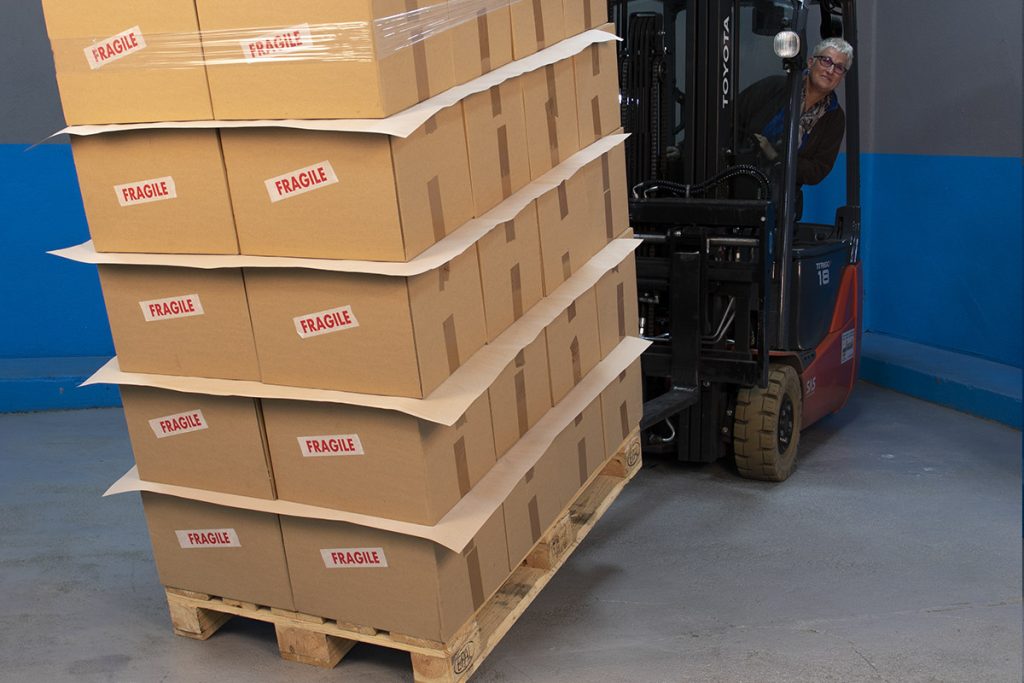
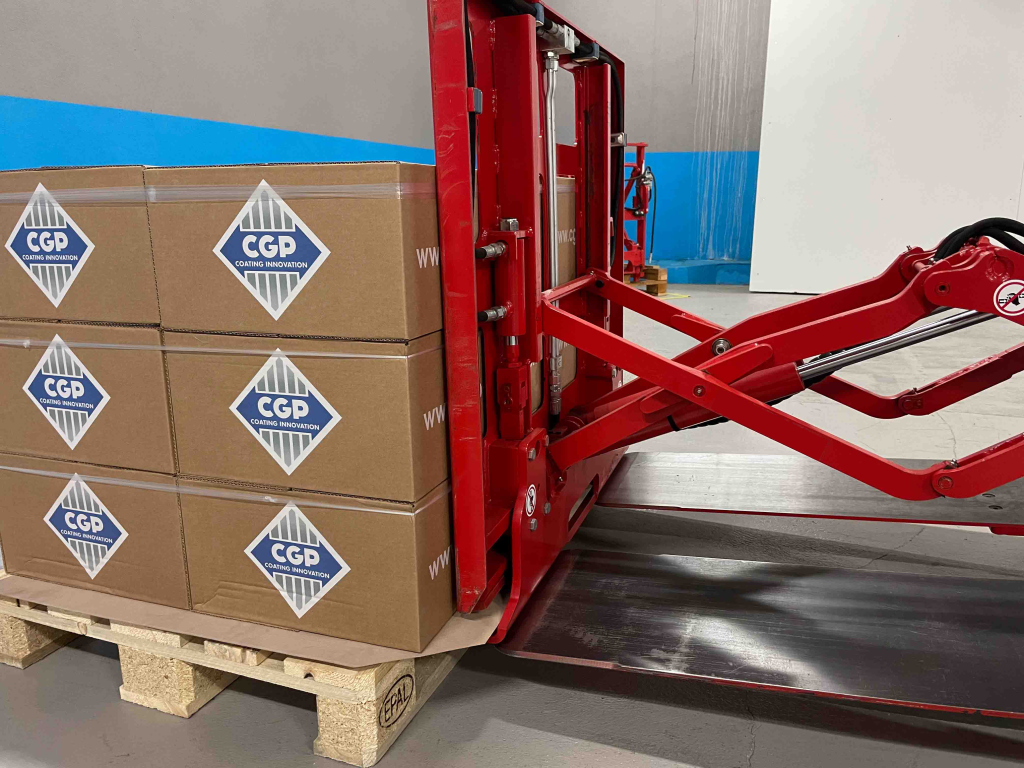
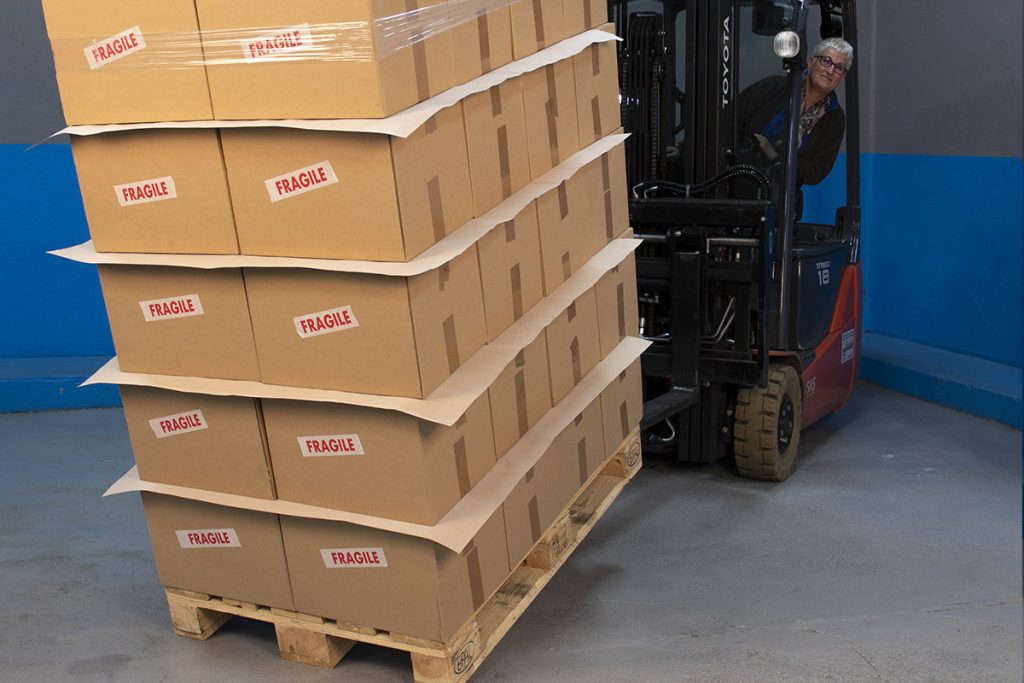
🔹 1. STABULON® – The Anti-Slip Pallet Interlayer That Reduces Stretch Film
The STABULON® palletizing interlayer:
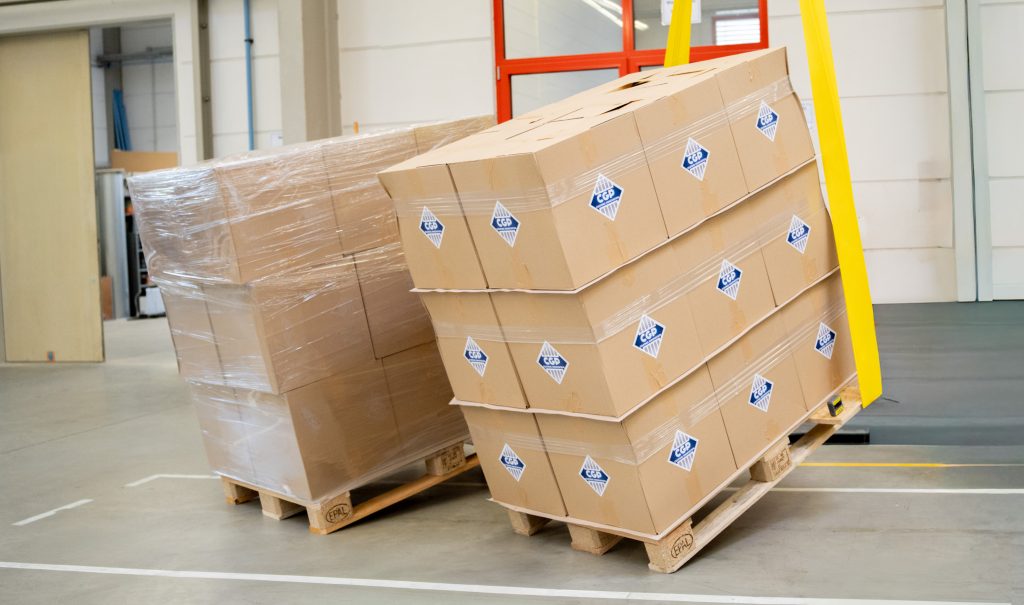
- stabilizes loads without additional film,
- prevents product shifting,
- ensures high pallet cohesion.
Result:
👉 Up to 50% reduction in stretch film consumption across many logistics flows.
👉 Less rewrapping, fewer damaged goods, and lower CO₂ emissions.

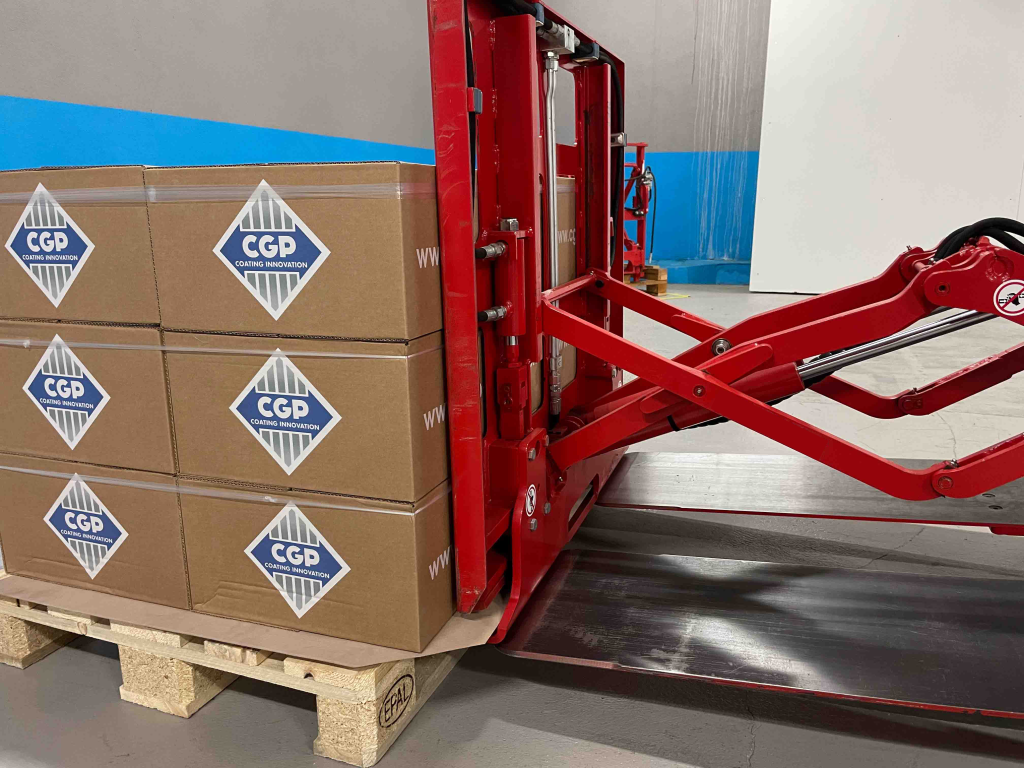
🔹 2. STABUSTRAP® – The Reusable Elastic Palletizing Band
Unlike conventional load-retention films, STABUSTRAP®:
- is reusable over multiple cycles,
- eliminates grouping stretch film,
- facilitates picking operations,
- is recyclable at the end of its life.
Result:
👉 Immediate reduction in single-use plastic within the warehouse.
👉 Lower waste generation and reduced material costs.

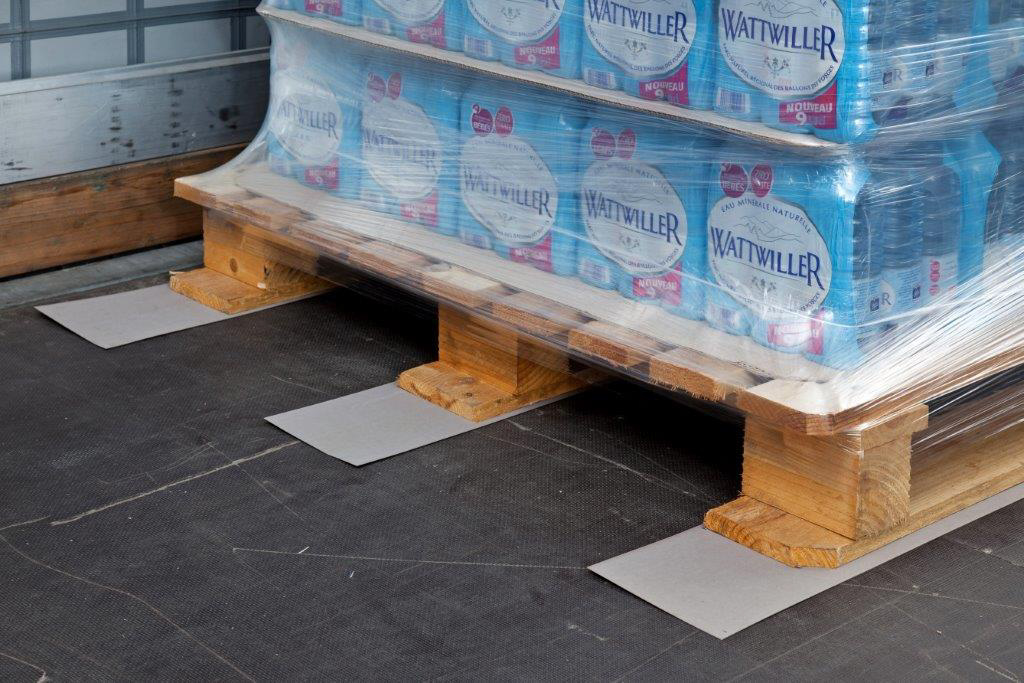
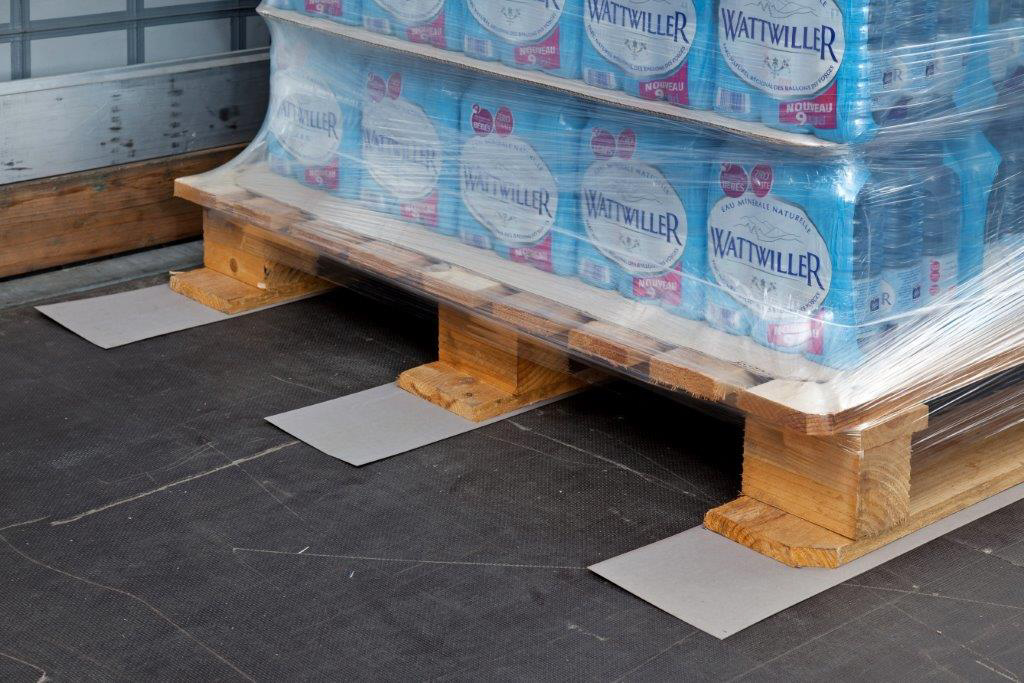
🔹 3. STABUSTOP® – Anti-Slip Pallet Feet
STABUSTOP® pallet stabilizers:
- secure pallet feet,
- reduce slipping and pallet falls,
- prevent the excessive use of plastic stretch film as compensation.
Result:
👉 A stable pallet without overwrapping it with plastic.
👉 Less product loss = less unnecessary CO₂ generated.

5- Measurable Benefits: How Does the COMBO Solution Reduce Your Carbon Footprint?
✔️ 30% to 70% reduction in plastic stretch film
→ Lower CO₂ emissions associated with production and end-of-life treatment.
✔️ More stable pallets = fewer damaged goods = fewer additional transports
Every return avoided directly reduces the logistics carbon footprint.
✔️ Easy integration into the paper recycling stream without complex sorting
→ Fully aligned with CSR policies and AGEC requirements.
✔️ Improved productivity
→ Less stretch wrapping, less handling, and lower energy consumption.
✔️ Visible CSR commitment
→ Easier internal and external communication with indicators such as:
“Plastic reduction (%),” “Tons of CO₂ saved,” “100% recyclable.”
6- Why Are Logistics Managers Adopting This Solution?
Leading logistics providers and industrial companies already implementing the CGP COMBO Solution value:
- Its ease of implementation,
- Immediate economic benefits,
- Its strong contribution to CSR objectives,
- Its genuine reduction of the carbon footprint,
- Improved pallet stability.
This solution answers the key question:
👉 How can you reduce your logistics carbon footprint while meeting your CSR commitments?
➡️ By directly reducing plastic use, improving pallet stability, and using recyclable materials.
Conclusion: Reducing the Carbon Footprint in Logistics Starts with Simple, Measurable Actions
The transition to more sustainable logistics is not only a regulatory requirement—it is also a powerful performance driver. With solutions such as STABULON®, STABUSTRAP®, and STABUSTOP®, companies can quickly reduce their carbon footprint while improving productivity.
The CGP COMBO Solution provides a comprehensive, practical, and sustainable answer to the CSR challenges faced by modern warehouses.

Our team helps you find the solution that meets your needs.