













Everything you need to know about packaging regulations
- Karine Morel
- [wpcode id="48710"]
Table of content
AGEC et PPWR, ce qui change pour les entreprises
Les réglementations sur les emballages se renforcent en France et dans toute l’Union européenne. Leur objectif est clair : réduire les déchets, limiter les emballages inutiles et accélérer le développement de solutions recyclables ou réemployables.
Deux textes structurent cette évolution :
- la loi AGEC, applicable en France depuis 2020 ;
- le règlement européen PPWR, qui s’appliquera progressivement à partir du 12 août 2026.
Pour les entreprises, ces réglementations impliquent de revoir la composition, la conception, l’étiquetage et la fin de vie de leurs emballages.
1- AGEC Law – France
Adopted in 2020, the Anti-Waste for a Circular Economy Law, known as the AGEC law, aims to transform production and consumption patterns.

It is based on five main objectives:
- gradually phasing out single-use plastics;
- providing consumers with better information;
- fighting waste;
- promoting reuse and repair;
- encouraging more responsible production.
One of its main objectives is to eliminate single-use plastic packaging in France by 2040. This transition is to take place in successive stages.
What does the AGEC Law change for companies?
Depending on their activity and the packaging they place on the market, companies must gradually:
- reduce the use of single-use plastics;
- limit over-packaging;
- favour reusable or recyclable packaging;
- improve the information provided to consumers;
- comply with applicable sorting and labelling instructions;
- take packaging end-of-life into account from the design stage.
The AGEC law therefore promotes a comprehensive approach. The choice of packaging no longer depends solely on its cost and technical performance. The amount of material used, recyclability and end-of-life management are also becoming essential criteria.
2- European Packaging Legislation
The European Packaging and Packaging Waste Regulation, or PPWR, corresponds to Regulation (EU) 2025/40.
It entered into force on 11 February 2025 and will gradually replace the former European Directive 94/62/EC. Most of its provisions will begin to apply on 12 August 2026.
Unlike a directive, a European regulation applies directly in all Member States. Companies will therefore have a more harmonised framework for placing their packaging on the European market.
The PPWR covers the entire packaging life cycle:
- its design;
- the materials and substances used;
- its manufacture;
- its placing on the market;
- its use or reuse;
- its collection, sorting and recycling.
3- What Are the Objectives of the PPWR?

Approved on March 4, 2024, the Packaging and Packaging Waste Regulation (PPWR). The PPWR primarily aims to reduce the amount of packaging waste generated in the European Union.
Compared with 2018, the targeted reduction per capita is:
- 5% by 2030;
- 10% by 2035;
- 15% by 2040.
The regulation also aims to:
- improve packaging recyclability;
- develop reuse and refill systems;
- limit unnecessary packaging and empty space;
- increase the share of recycled materials in plastic packaging;
- harmonise labelling and sorting rules;
- restrict certain substances of concern;
- strengthen producer responsibility.
These requirements apply to household, industrial, commercial, logistics and transport packaging, with rules that may vary depending on their use.
4- What Changes and When?
From 12 August 2026
Most of the PPWR’s general provisions will begin to apply.
Companies will in particular need to anticipate:
- restrictions concerning certain substances of concern;
- applicable PFAS thresholds for food-contact packaging;
- new compliance obligations;
- the preparation of technical documentation;
- packaging traceability;
- clarification of responsibilities between manufacturers, importers and distributors.
The declaration of conformity will become an important element in demonstrating that packaging complies with the requirements of the regulation.
From 1 January 2030
The main requirements relating to packaging design will come into force.
Companies will in particular have to comply with:
- mandatory recyclability criteria;
- minimum recycled material content for certain plastic packaging;
- reuse targets for certain packaging categories;
- the ban on certain single-use plastic packaging formats;
- limits on empty space in certain transport, grouped and e-commerce packaging.
Packaging will have to achieve a sufficient level of recyclability in order to remain on the market. Packaging with a recyclability rate below 70% will no longer be allowed to be marketed.
The limitation of empty space will also require companies to better adapt the size of their packaging to the product being transported.
From 2035
Packaging will not only have to be designed to be recyclable, but also recycled at large scale under real-world collection, sorting and processing conditions.
Requirements relating to recycled materials and recyclability performance will then continue to become more stringent.
It is therefore inaccurate to refer to “100% recycled packaging by 2035”. The objective concerns effective recyclability and large-scale recycling, rather than guaranteeing that every package placed on the market will actually be recycled.
5- What Are the Practical Consequences for Companies?
The PPWR is gradually changing the rules governing packaging design and procurement.
Check the Composition of Materials
Companies should ask their suppliers for precise information on:
- packaging composition;
- the possible presence of PFAS;
- other substances of concern;
- the share of recycled material;
- compatibility with recycling streams.
This verification is particularly urgent for food packaging, given the August 2026 deadline concerning PFAS.
Clarify Responsibilities
The manufacturer, importer, distributor or company placing the packaging on the market may be subject to extended producer responsibility obligations.
It is therefore necessary to determine:
- who is legally responsible for the packaging;
- who provides the declaration of conformity;
- who keeps the technical documentation;
- who finances or organises its end of life;
- how these responsibilities are allocated in contracts.
Anticipate Recyclability
The 2030 deadline may seem a long way off, but a packaging modification project often takes several years.
It is important to plan for:
- the selection of new materials;
- protection and preservation tests;
- testing on packaging machines;
- validation of industrial production rates;
- adaptation of printing and sealing systems;
- supplier qualification;
- regulatory and commercial validation.
Packaging combining several materials that are difficult to separate will require particular attention.
Reduce Packaging and Empty Space
The PPWR is not only about replacing plastic. It also requires companies to limit the total amount of packaging used.
Companies will need to look for solutions that make it possible to:
- reduce packaging weight and volume;
- eliminate unnecessary components;
- adapt the format to the product;
- limit empty space in packages;
- avoid multiple layers of packaging when they are not necessary.
Prepare Compliance Evidence
Compliance will no longer rely solely on a commercial declaration. It will need to be demonstrable.
Companies will progressively need to gather:
- the packaging’s technical specifications;
- information about its composition;
- test results;
- recyclability data;
- supplier declarations;
- evidence relating to recycled material content.
6- Three Priorities to Address Now
1. Check Materials
It is necessary to check for the presence of PFAS and other substances of concern, particularly in packaging intended for food contact.
2. Clarify Responsibility
The company must determine whether the manufacturer, importer or distributor is responsible for the regulatory obligations and the packaging’s end-of-life management.
3. Anticipate Recyclability
Materials, coatings, inks, adhesives and assemblies should be assessed now in order to prepare for the requirements applicable from 2030 onwards.
7- How Can Your Company Prepare for the PPWR?
A first approach can be organised into five steps:
- List the packaging used
Identify its function, composition, weight and volume. - Classify packaging according to risk level
Prioritise food packaging, complex structures, single-use plastic packaging and formats containing a large amount of empty space. - Question suppliers
Request technical data sheets, declarations of conformity, information on PFAS and recyclability data. - Identify replacement solutions
Explore material reduction, switching to a simpler structure, using paper or developing reuse systems. - Plan industrial trials
Check that the new solution maintains the expected performance: protection, barrier properties, sealing, machinability, preservation and transport.
8- Paper Packaging to Support the Transition
Paper can help reduce the use of plastic in certain applications. However, its selection should be based on a comprehensive assessment of the expected performance, composition and recyclability.
At CGP Coating Innovation, we develop solutions designed to support this transition:
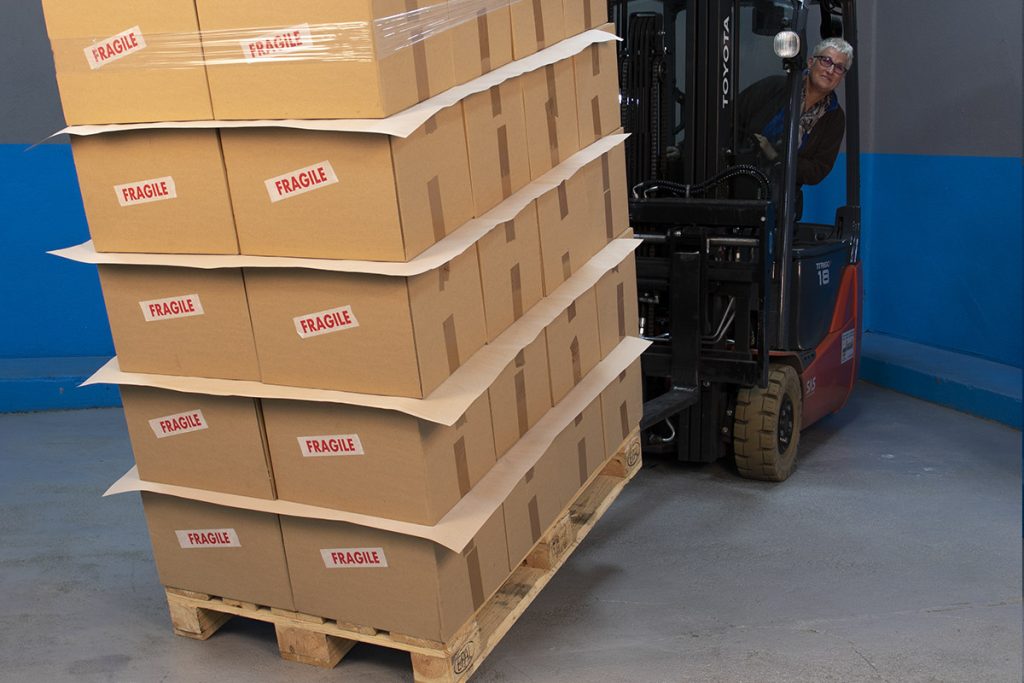
- PACKOKRAFT®, a range of heat-sealable and functional packaging papers;
- BANDOKRAFT®, a grouping solution using heat-sealable paper bands.
Switching from plastic to paper should not be considered simply as a change of material. Product protection, barrier properties, sealing, equipment performance and packaging end-of-life must all be assessed.
Conclusion
The AGEC law and the PPWR are accelerating the transition towards reduced, recyclable and, where relevant, reusable packaging.
For companies, the first major deadline is 12 August 2026. It concerns, in particular, substances of concern, compliance and technical documentation. Recyclability requirements, empty-space reduction and certain restrictions on plastic packaging will then apply from 2030 onwards.
The challenge is therefore no longer simply to understand the regulations, but to turn these deadlines into an action plan: audit packaging, secure supplier information, review contracts and launch redesign projects early enough.
CGP Coating Innovation supports companies in the study and development of paper packaging solutions adapted to their products and equipment.

PACKOKRAFT® heat-sealable kraft paper packaging and BANDOKRAFT® heat-sealable paper bundling bands provide sustainable solutions for your packaging needs.
Would you like to reduce the share of plastic in your packaging or explore a paper-based solution?
Discover our transition packaging solutions.
Our team helps you find the solution that meets your needs.