





Moisture resistance of cardboard : Tips and techniques for optimum protection
- Karine Morel
- [wpcode id="48710"]
Table of content
1- Wet cardboard: what impact does it have on stabilization?
The resistance of cardboard to moisture is a major challenge for industrial and logistics companies.
It does not only concern product protection. It directly impacts:
- load stability
- transport safety
- the reliability of logistics flows

In high-risk environments, such as coastal areas or non-climate-controlled warehouses, humidity becomes a major destabilizing factor.
2- Humidity and loss of mechanical strength
When cardboard absorbs moisture, its fibers relax and lose their cohesion.
This degradation leads to a loss of mechanical rigidity.
Direct consequences:
- progressive crushing of the lower layers,
- overall pallet sagging,
- deformation of the boxes (bulging, waviness, sagging).
These deformations create uneven contact surfaces, compromise stack flatness, and weaken load stability.
Humidity also promotes the growth of mold and bacteria.
This can result in:
- health non-compliance,
- rejections upon receipt,
- product returns,
- an increase in reverse logistics.
The impacts on costs and operational continuity are therefore significant.
3- Direct impacts of humidity on load stabilization
In a humid environment, the loss of cardboard strength immediately affects pallet stabilization.
A wet cardboard box often has a smoother surface or is contaminated by water.
Result: a decrease in the coefficient of friction between the boxes.
Dynamic instability during transport
The combination of :
- softened cardboard,
- reduced friction,
- amplifies micro-movements during transport.
During acceleration, braking, or under the effect of vibrations:
- the palletizing pattern deteriorates,
- dynamic instability occurs,
- risks increase over long distances.
Loss of strapping and wrapping effectiveness
Humidity weakens the edges of cardboard.
They absorb tension less effectively from:
- strapping bands,
- stretch films.
This causes a gradual loss of vertical support.
In the most severe cases, this situation can lead to:
- partial or total pallet collapse,
- damages,
- logistics accidents,
- flow disruptions.
An unstable pallet may also fail to meet transport safety requirements, resulting in:
- regulatory non-compliance,
- an increase in transport disputes,
- a decline in service levels.
4- Factors affecting the moisture resistance of cardboard
The type of cardboard plays a central role.
Corrugated cardboard, made of several layers of fluted paper, offers strength linked to its design.
Without specific protection, however, it quickly loses its load-bearing capacity in a humid environment.
The quality of the paper is also decisive.
Highly absorbent paper accelerates the drop in vertical compression strength, essential for stacked pallets.
Construction, thickness, and flute type improve durability but are not always sufficient in a humid environment.
The treatments applied to cardboard then become essential.
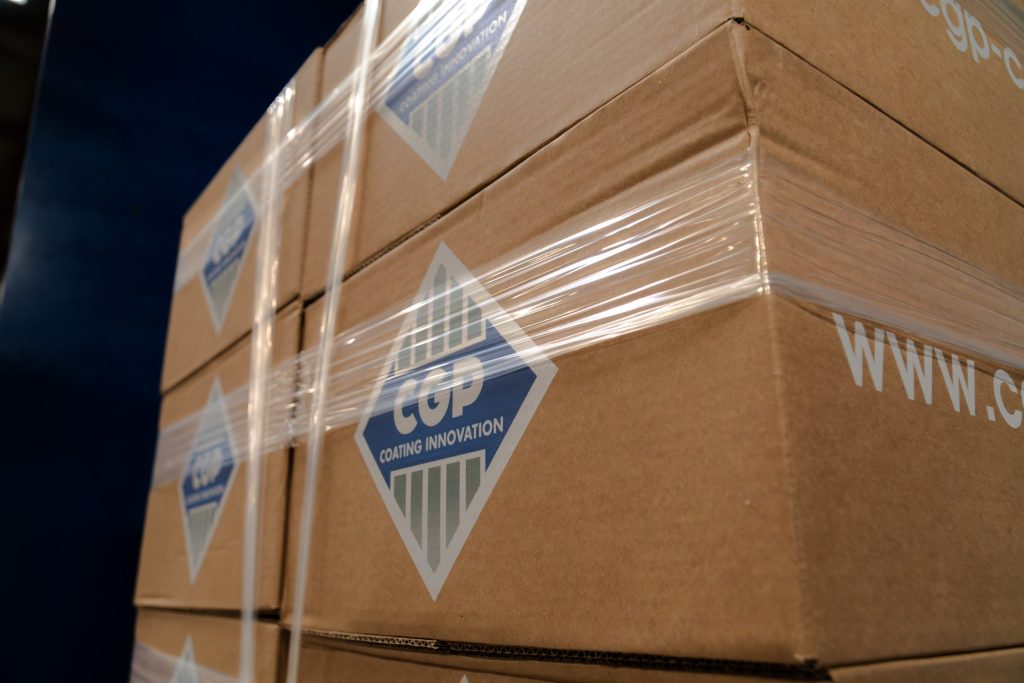
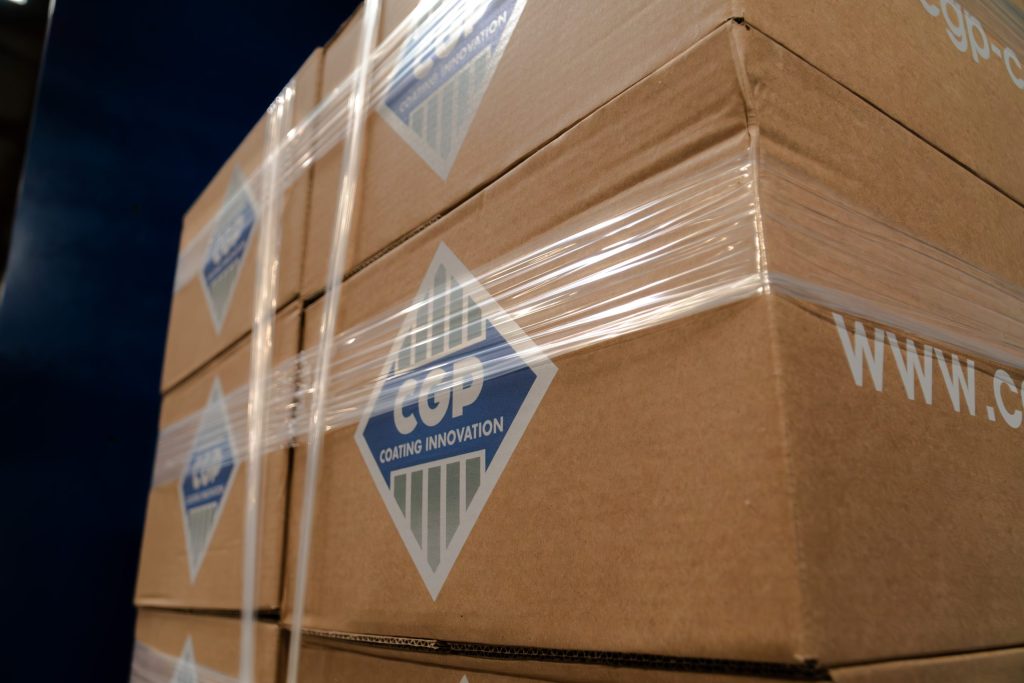
Hydrophobic coatings, developed notably by CGP Coating Innovation, make it possible to:
- limit water penetration,
- preserve mechanical properties,
- maintain a friction level compatible with load stabilization.
5- Techniques to improve moisture resistance and logistics performance
To secure logistics flows in a humid environment, several levers can be combined.
Hydrophobic coatings

Applying hydrophobic coatings to cardboard makes it possible to:
- slow down water absorption,
- preserve the rigidity of packaging,
- reduce the need for over-packaging.
Unlike traditional treatments (wax, plastic films), these solutions offer a better balance between performance and usability.
Best practices for storage and handling
Logistics practices play a key role:
- humidity level control,
- storage on elevated pallets,
- limiting contact with wet surfaces.
These measures significantly reduce risks before transport.
6- Hydrophobic pallet separators: a cost-effective alternative
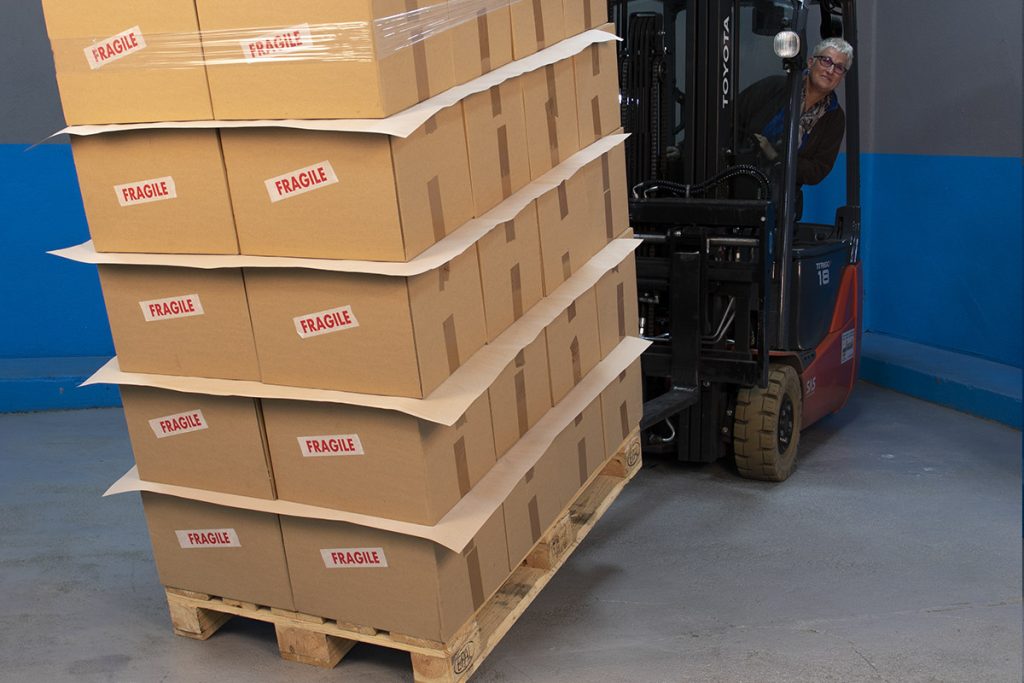
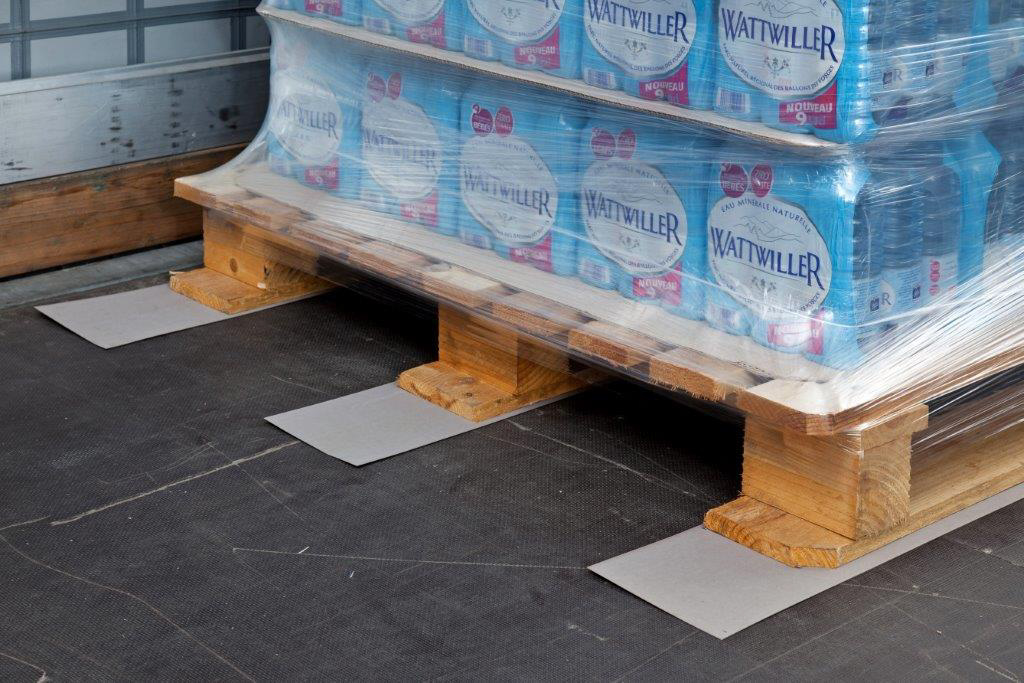
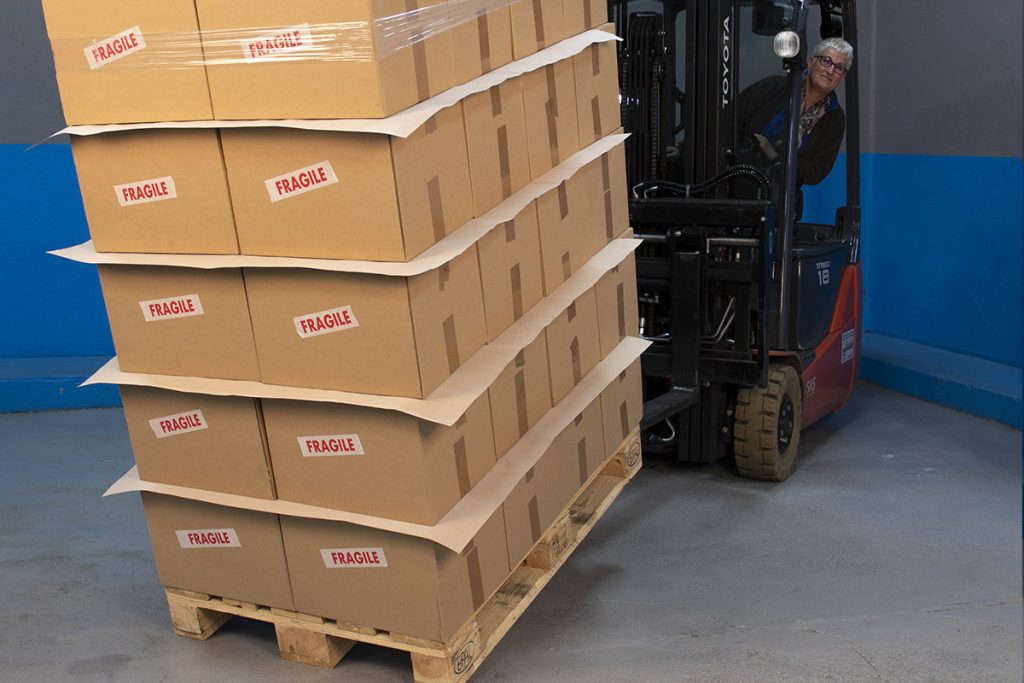
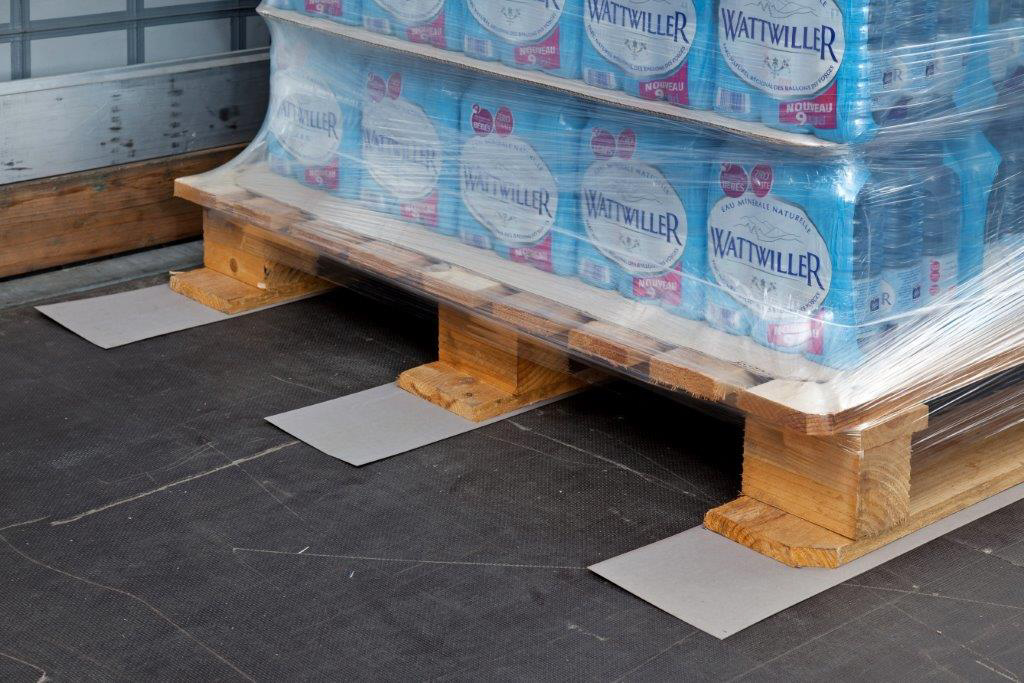
As a complement or alternative to hydrophobic cardboard, the use of hydrophobic pallet separators is a particularly effective solution.
Placed at the pallet base, they form a barrier against moisture rising from:
- wooden pallets,
- plastic pallets,
- floors and loading docks.
They thus protect the first layer of boxes, which is mechanically the most stressed.
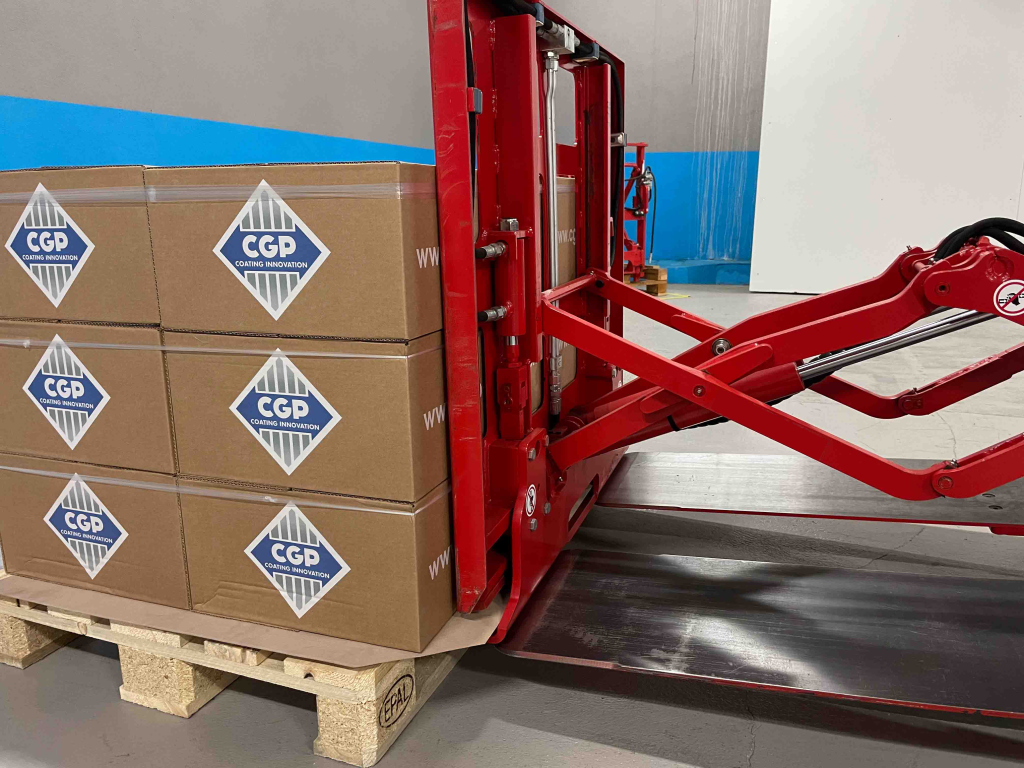
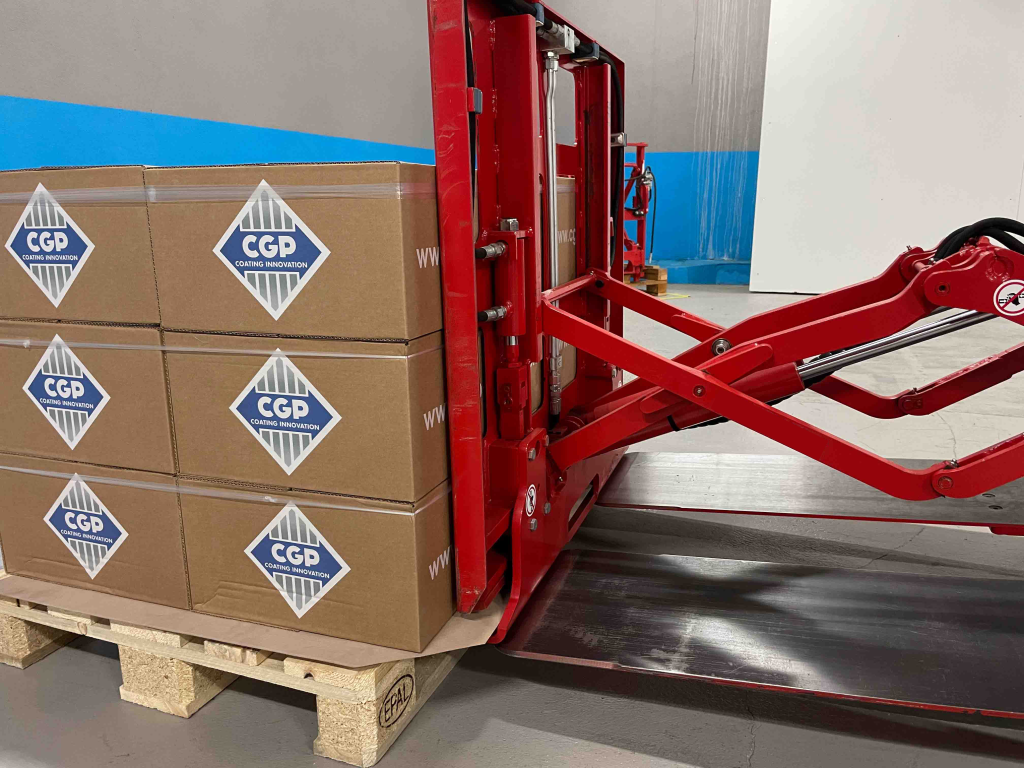
Used as layer separators, they make it possible to:
- maintain a consistent friction level,
- limit horizontal sliding,
- reduce micro-movements during transport.
This targeted approach secures palletizing at strategic points while controlling costs.
It provides a cost-effective alternative to the systematic use of hydrophobic cardboard boxes, while improving overall stability in a humid environment.

7- Innovations and technological advancements
Technological innovations complement these solutions.
- Nanotechnology coatings provide a lightweight and high-performance hydrophobic barrier.
- Composite materials enhance mechanical strength in humid conditions, provided an appropriate environmental analysis is conducted.
- IoT sensors enable real-time monitoring of humidity levels during storage and transport.
This proactive management facilitates risk anticipation and the implementation of corrective actions.
Conclusion
The moisture resistance of cardboard is a key factor in load stability and overall logistics performance.
When cardboard loses its mechanical and friction properties, the impacts ripple throughout the entire logistics chain.
Hydrophobic coatings, combined with adapted logistics practices and hydrophobic separators, help secure loads at a lower cost.
To go further, discover our stabilization solutions tailored for challenging logistics environments.


Our team supports you in finding the solution that meets your needs.