


PE-Coated Kraft: PE Only Where It Is Needed
- Karine Morel
- [wpcode id="48710"]
Table of content
PE-coated kraft is a paper coated with PE (polyethylene) that is widely used in food packaging. Barrier properties, heat sealability, strength: its advantages are undeniable.
However, in its traditional form, it often contains far more polyethylene than necessary, which can create issues in terms of the paper-to-polymer ratio and compliance with the new PPWR regulation.
Registered partial coating changes the game.
1- What Is PE-Coated Kraft?
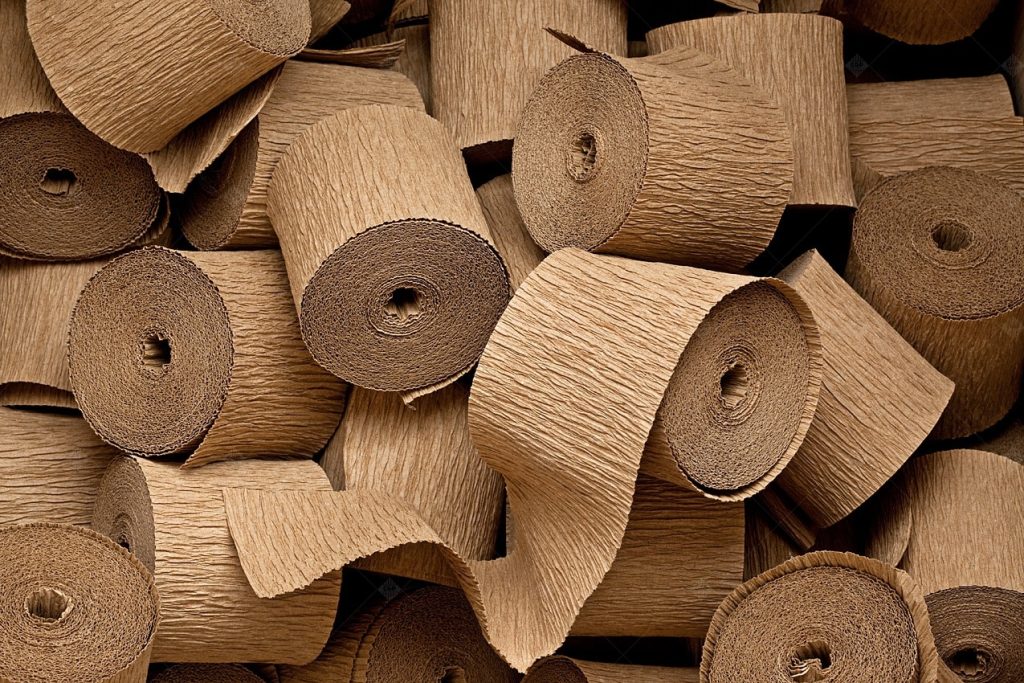
PE-coated kraft is kraft paper coated with a layer of polyethylene on one or both sides. It is also known as PE-coated paper or heat-sealable kraft paper. It is one of the most widely used packaging papers in industry.
Its properties complement each other. Kraft paper provides mechanical strength, while PE provides moisture resistance, grease resistance and heat sealability.
This kraft paper is widely used across numerous industrial and food applications.
Among the different types of packaging paper available, PE-coated kraft has become a benchmark. However, its traditional design presents an increasingly significant challenge.
2- The Problem with Traditional PE-Coated Kraft
The amount of plastic used in your packaging needs to be reduced. Your customers expect it. Product specifications increasingly require it. The European PPWR regulation makes this requirement even clearer.
Yet the traditional approach has always been the same: apply a PE coating across the entire surface of the kraft paper. Front and back. Everywhere. Simply because it was easier to manufacture.
The consequences are immediate:
- PE-coated paper contains more plastic than it actually needs.
- The plastic-to-paper ratio makes it more difficult to fit into paper recycling streams.
- Material costs reflect this unnecessary polymer consumption.
Take a common example: the individual overwrap for a tea bag. Its function is very specific: to be heat-sealed along its edges.
These functions are localized. Heat sealing only occurs along the edges.
Yet traditional heat-sealable kraft receives a PE coating across its entire surface, including areas where the polymer serves no purpose.
Why pay for unnecessary PE? Why increase the plastic footprint of your food packaging with a coating that provides no functional benefit?
3- The Solution: Registered Partial Coating
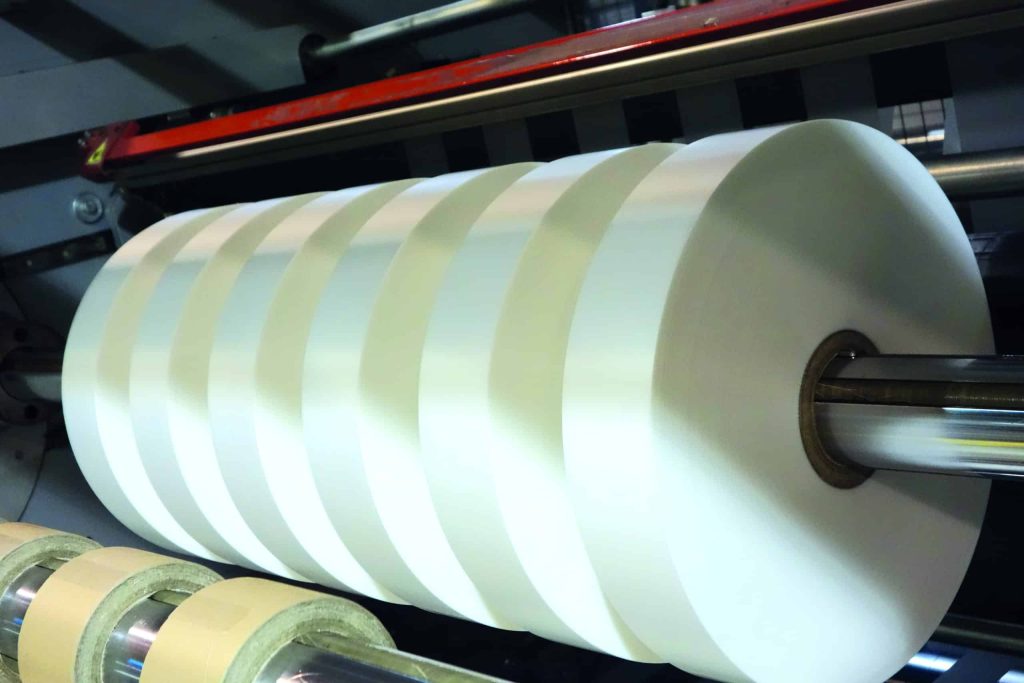
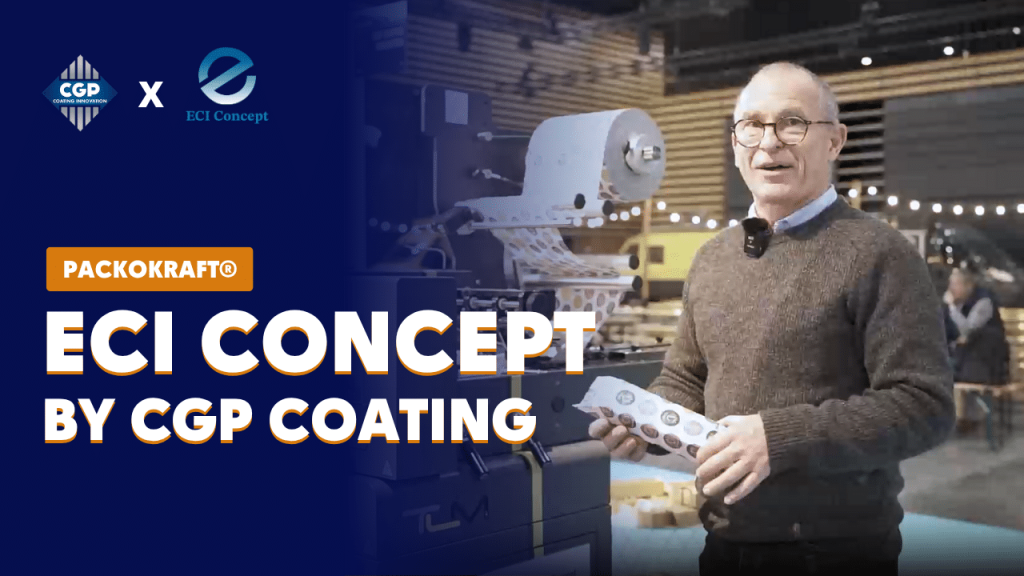
At CGP, we have developed a precise industrial solution: apply PE only where it is functionally required on the kraft paper, with registration accuracy that guarantees repeatability in high-volume production.
For an individual tea bag overwrap, this means:
- PE strips applied only to the sealing areas.
- The remainder of the paper stays natural, without unnecessary polymer.
- A dramatically improved paper-to-PE ratio.
- Easier integration into existing paper recycling streams.
What sets CGP apart from other coated papers on the market is a rare industrial capability: registered partial coating on both sides in a single machine pass.
Perfect registration accuracy between both sides. No second pass. No additional handling. Maximum reduction in overall polymer application.

4- PACKOKRAFT SEAL: Heat-Sealable Kraft with Targeted PE Application

This approach is at the heart of PACKOKRAFT SEAL, CGP’s solution dedicated to applications where heat sealability is the primary function.
PE is applied only to the sealing areas. The rest of the kraft paper remains natural, with no unnecessary polymer, no unnecessary material costs and no unnecessary plastic impact.
PACKOKRAFT SEAL is particularly suitable for:
- Individual overwraps for tea, herbal tea and infusion bags.
- Food packaging kraft bags for dry products such as pasta, rice, pulses and flour.
- Industrial grouping bags and pouches.
- Any heat-sealable PE-coated paper where sealing is the primary function.

5- Recyclability: The Numbers Speak for Themselves
PE-coated kraft with registered partial coating benefits from the excellent recycling performance of paper.
This type of packaging paper offers measurable advantages:
- 71.4% of paper and cardboard recycled in Europe (CEPI, 2023).
- 88% of paper and cardboard packaging recycled in France (CITEO, 2023).
- Kraft paper fibres can be recycled and reused up to seven times.
By comparison, only 32% of plastics are recycled in Europe. By reducing the PE-to-paper ratio, PACKOKRAFT SEAL integrates naturally into existing paper recycling streams.
6- What This Changes in Practice
Using less PE on your PE-coated paper has an immediate impact on four key areas.
Environmental. A more favourable paper-to-PE ratio. Improved recyclability. A reduced plastic footprint for your food packaging.
Regulatory. A practical response to PPWR requirements and the CSR specifications imposed by your customers.
Technical. The same sealing performance as traditional heat-sealable kraft, precisely where it is needed.
Economic. Less polymer applied to the kraft paper means less polymer purchased, with no compromise on performance.
Conclusion
PE-coated kraft is evolving. This widely used PE-coated paper for food packaging is being reinvented through registered partial coating. Less unnecessary plastic. The same performance. Better recyclability.
Among all the heat-sealable paper solutions available today, PACKOKRAFT SEAL represents one of the most advanced ways to combine performance with environmental responsibility.
Do you manufacture overwraps, pouches or heat-sealed packaging? Contact CGP to discuss the feasibility of your application.


Our team helps you find the solution that meets your needs.