



















Automated Distribution Centers: The New Rules of Palletizing
- Karine Morel
- [wpcode id="48710"]
Table of content
Automated Depalletizing: Why Pallet Layer Sheets Have Become a Strategic Issue
1- When Pallet Stability Meets Logistics Automation
Over the past several years, automated distribution centers have expanded rapidly, driven by warehouse robotics, labor shortages, and the constant pursuit of higher productivity.
This evolution has fundamentally changed the requirements placed on logistics units.
In the past, a pallet simply had to arrive at its destination intact.
Today, it must also be capable of being handled, stored, transported, unwrapped, and automatically depalletized by robotic equipment without causing jams, line stoppages, or human intervention.
In this context, depalletizing has become a strategic issue for all players across the supply chain.
2- Depalletizing: A Critical Yet Often Overlooked Process
Depalletizing consists of automatically or manually removing products from a pallet so they can be directed to an order fulfillment, storage, or production line.
In automated distribution centers, this operation is generally carried out using:
- Layer Picker systems that remove an entire layer of products at once;
- Pallet-to-Tray systems that remove successive layers before feeding automated installations.

To operate efficiently, these systems require loads that are perfectly stable and predictable.
Even the smallest irregularity can result in:
- production line stoppages;
- picking errors;
- toppled products;
- packaging damage;
- a significant loss of productivity.
It is precisely to address these challenges that retailers and manufacturers have developed common recommendations through the GS1 standard.
3- GS1 : The Essential Standard for Automated Distribution Centers
The GS1 Automated Distribution Centre guideline was jointly developed by major manufacturers and retailers such as Nestlé, Unilever, Coca-Cola, Carrefour, Colruyt, and Les Mousquetaires.
Its objective is straightforward: to ensure pallet compatibility with automated receiving, storage, and depalletizing systems.
The guide specifies requirements relating to:
- pallet dimensions and quality;
- load height and weight;
- product overhang;
- layer stability;
- load securing methods;
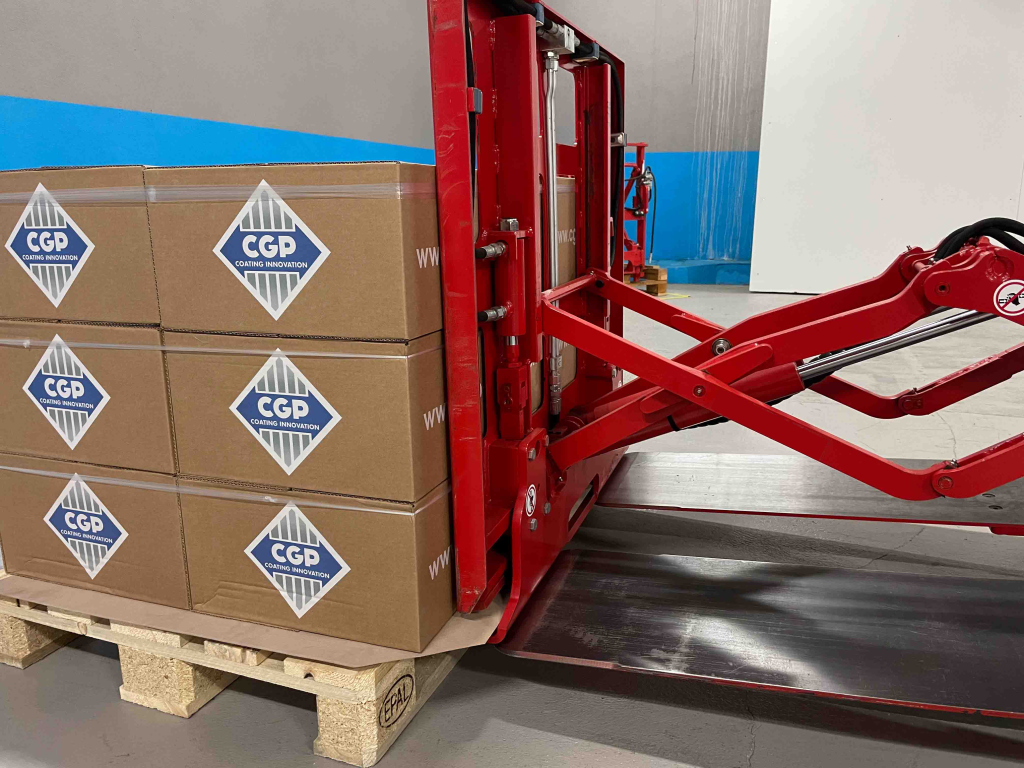
- pallet layer sheets;
- packaging characteristics.
These recommendations have become the benchmark for many automated logistics centers across Europe.
4- The Paradox of Anti-Slip Layer Sheets
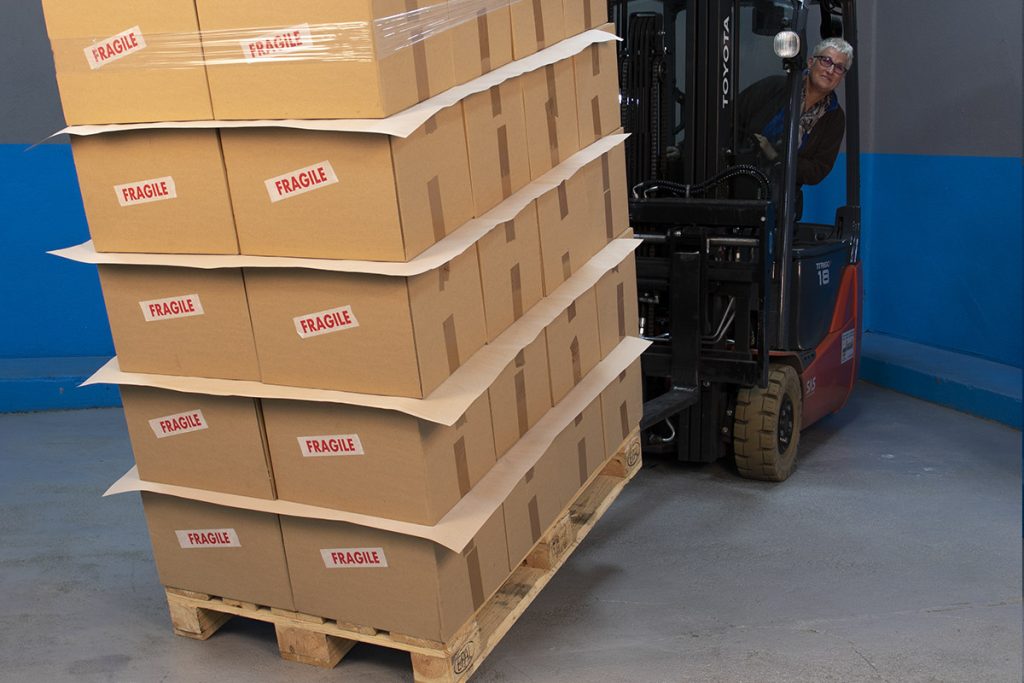
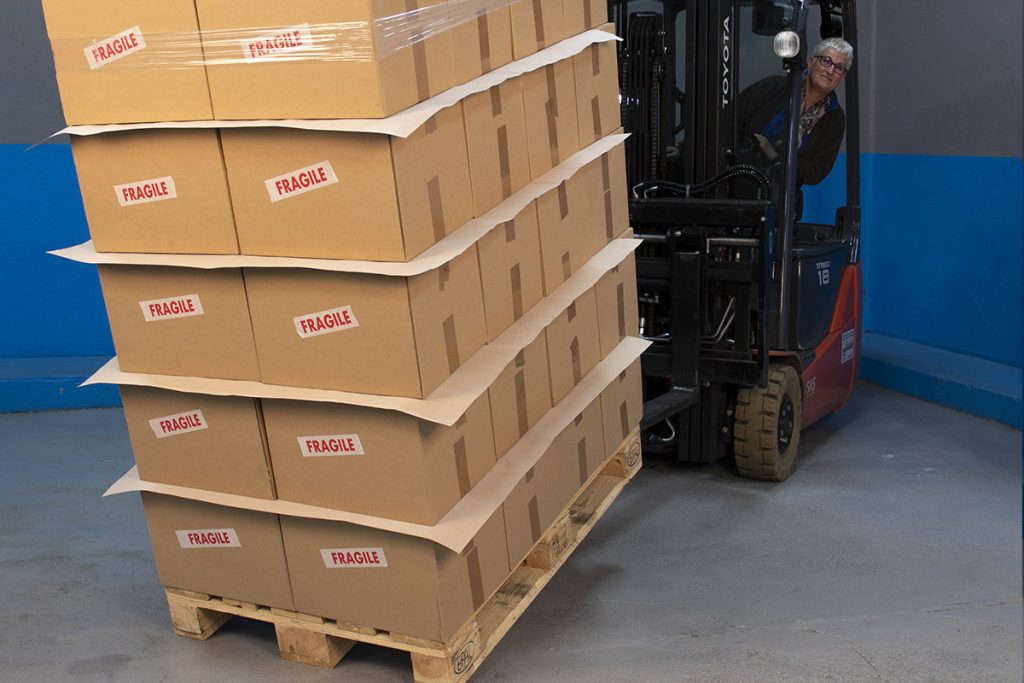
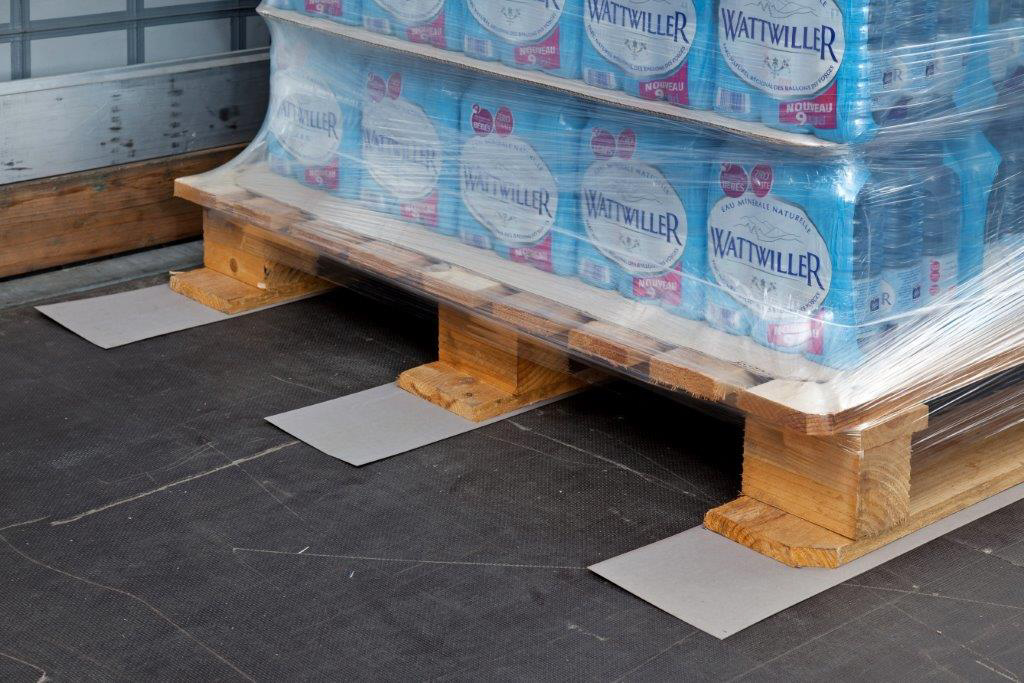
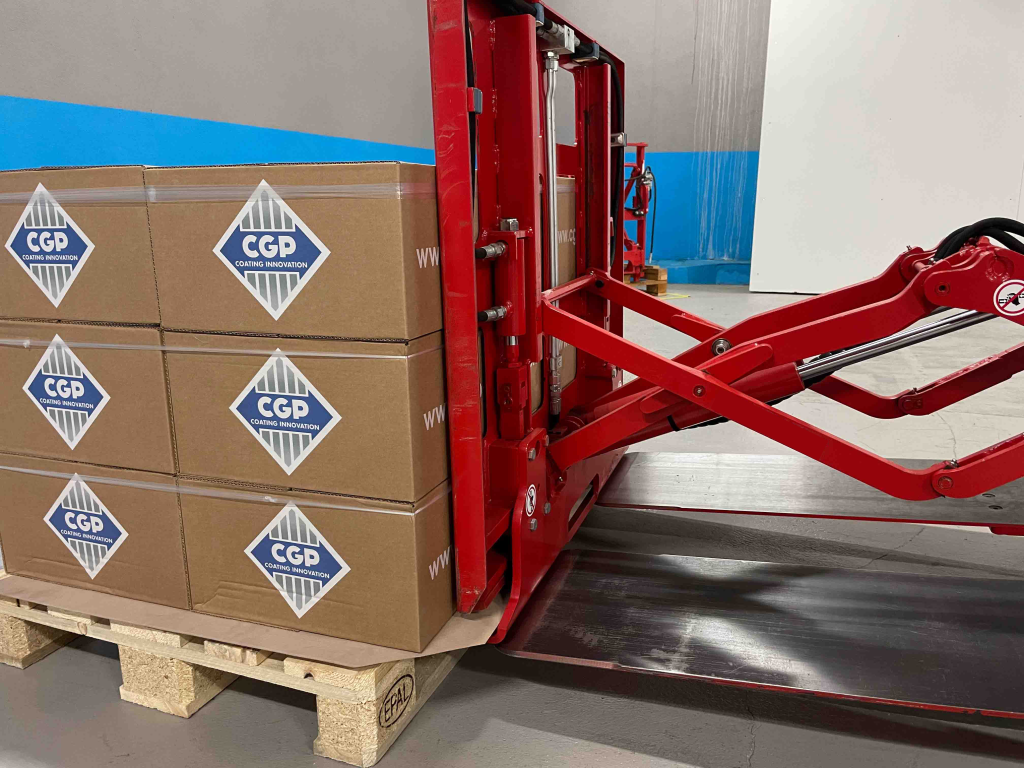
To improve pallet stability during transportation, many manufacturers use anti-slip layer sheets.
Their effectiveness is widely recognized:
- reduced load movement;
- lower transport damage;
- improved safety;
- reduced reliance on stretch wrap and strapping.
However, these same layer sheets have long raised concerns in automated warehouses.
The reason is simple: a poorly designed layer sheet can disrupt the depalletizing process.
The main risks identified include:
- insufficient basis weight;
- poor flatness;
- excessive friction coefficient;
- a layer sheet trapped between packages;
- insufficient stiffness during vacuum lifting.
In other words, a product designed to improve load stability can become a source of operational failure if it is not adapted to the constraints of robotic depalletizing systems.
5- What GS1 Actually Recommends for Layer Sheets
Contrary to some common misconceptions, GS1 does not prohibit the use of pallet layer sheets in automated logistics.
On the contrary, they are explicitly recognized as an effective way to reduce layer slippage during transportation.
However, the guide defines several essential criteria:
- a minimum recommended basis weight of 120 g/m² for paper or cardboard layer sheets;
- flat, one-piece layer sheets;
- dimensions matching the load layer without exceeding pallet dimensions;
- no folds or creases;
- only one layer sheet per layer;
- the same type of layer sheet throughout the pallet;
- no adhesion between the layer sheet and the packaging;
- sufficient stiffness to withstand vacuum gripping systems.
The guide also highlights one particularly revealing principle:
the thicker and stiffer the layer sheet, the lower the risk of disrupting automated systems.
6- Pallet Stability Remains the Primary Success Factor
Beyond the layer sheet itself, the overall quality of palletizing remains critical.
GS1 particularly emphasizes:
- uniform layers;
- properly aligned products;
- consistent load height;
- product overhang limited to a maximum of 50 mm;
- high-quality pallets;
- smooth surfaces allowing accurate detection by automated sensors.
Field experience also shows that several parameters strongly influence successful depalletizing:
- palletizing pattern;
- packaging type;
- layer height;
- robot vacuum level;
- quality of the layer sheets used.
7- An Opportunity for Manufacturers
Depalletizing is no longer just a logistics issue.
It has become a key component of the relationship between suppliers and retailers.
In some automated distribution centers, compliance with GS1 requirements directly determines whether pallets and their associated load stabilization solutions are accepted.
For manufacturers using anti-slip layer sheets, the challenge is therefore no longer simply to improve transport stability, but also to demonstrate that their solutions are fully compatible with their customers’ automated processes.

Real-world testing, collaboration with distribution centers, and compliance with GS1 recommendations have therefore become essential steps in ensuring long-term logistics reliability.
8- When Robots Take Over the Pallet: The Example of Körber Systems
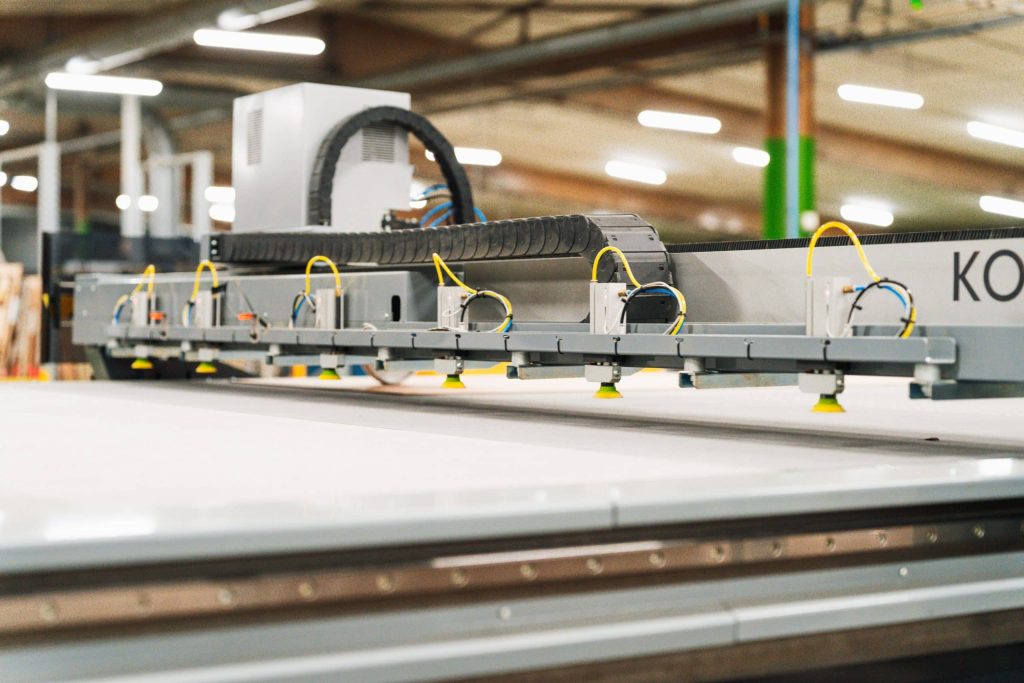
To understand the constraints imposed on modern pallets, it is useful to examine how depalletizing equipment operates in large distribution centers.
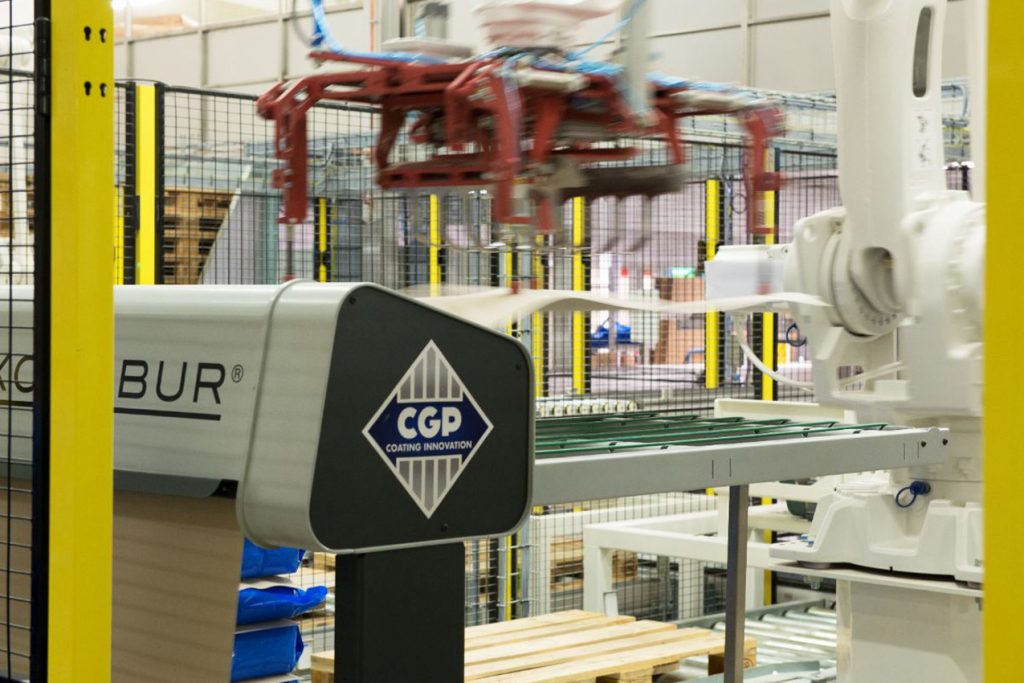
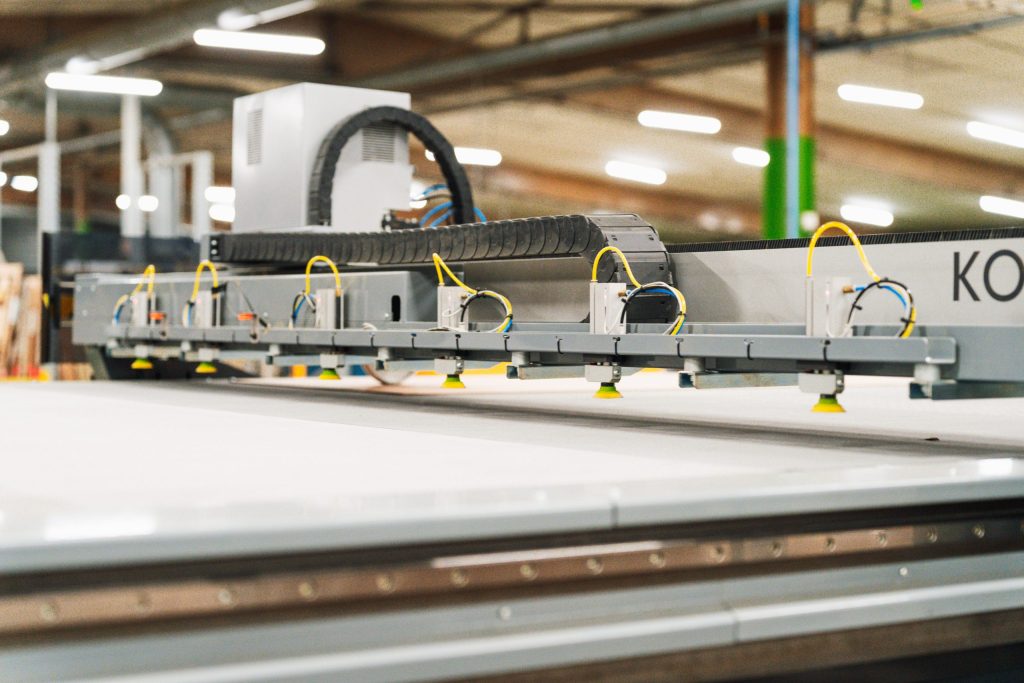
Among the leading market players is Körber, a global specialist in logistics automation solutions. Its Layer Picker system is now deployed in hundreds of warehouses worldwide to automate depalletizing and order fulfillment operations.

The principle is straightforward: instead of an operator manually removing cartons, the robot picks up an entire product layer, removes any layer sheets, separates individual cases, and automatically directs them to order picking areas. This approach increases productivity while reducing handling costs and the risk of musculoskeletal disorders.
The most advanced systems combine several functions:
- full-layer picking;
- automatic layer sheet removal;
- case separation;
- package rotation or orientation;
- automated loading onto totes or logistics trays.
Körber states that its technology can process up to 98% of packaging formats found in grocery retail through a patented combination of vacuum gripping and mechanical clamping.
This level of automation explains why logistics centers now enforce strict requirements regarding:
- pallet quality;
- layer uniformity;
- case dimensions;
- load overhang;
- packaging rigidity;
- pallet layer sheet characteristics.
A torn, overly flexible, or carton-adhering layer sheet can cause a production line stoppage. Likewise, an unstable pallet or deformable packaging may prevent the robot from successfully lifting an entire product layer.
It is precisely to address these constraints that the GS1 guideline has established detailed recommendations for the design of pallets, packaging, and layer sheets intended for automated distribution centers.
Conclusion
The automation of logistics centers is fundamentally transforming the rules of palletizing.
Pallet layer sheets are no longer merely transport stabilization tools; they have become integral components of automated depalletizing processes.
When properly designed and compliant with GS1 recommendations, they make it possible to reconcile two objectives that have often been considered contradictory: ensuring maximum transport stability while enabling fast, reliable, and fully automated depalletizing.
In an environment where every production line stoppage represents a significant cost, mastering this balance has become a genuine competitive advantage.
Meta description: Discover the role of pallet layer sheets in automated depalletizing and learn about the key GS1 recommendations for automated distribution centers.


Our team helps you find the solution that meets your needs.