





















Pallet deviation: Avoid costly mistakes
- Karine Morel
- [wpcode id="48710"]
Table of content
1- Why Is Pallet Alignment So Important?
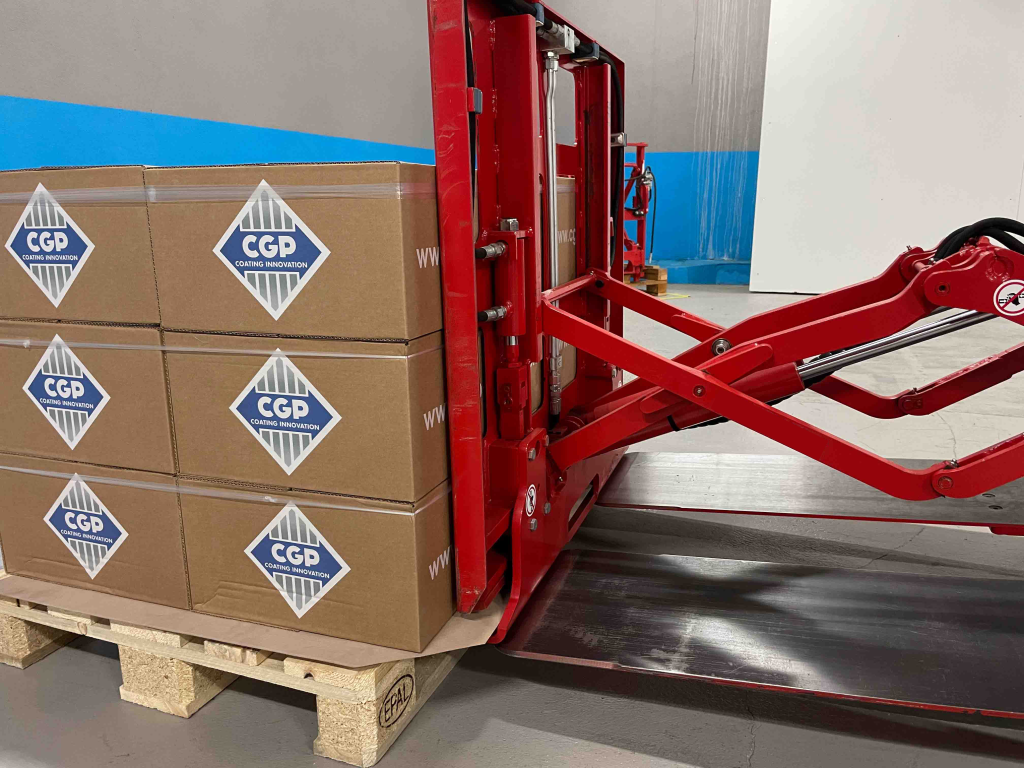
A palletized load showing a pallet misalignment of more than 30 mm may appear acceptable at first glance. However, this deviation is often a sign that the load unit is losing its structural integrity.
During transportation, a pallet is subjected to acceleration, braking, cornering, and vibrations. If the individual layers begin to shift, load stability gradually decreases. This loss of stability increases the risk of goods falling, delivery refusals, or handling accidents.

It is precisely to address these challenges that the EUMOS 40509 standard was developed.
2- EUMOS 40509: The Benchmark for Pallet Load Stability
The EUMOS 40509 standard defines a method for evaluating the stability of palletized loads.
Unlike a simple visual inspection, this standard reproduces the stresses encountered during pallet transportation, including:
- longitudinal acceleration;
- emergency braking;
- changes of direction;
- dynamic loading conditions.

The objective is to verify that a load unit maintains its integrity throughout the entire supply chain.
At the end of the load stability test, the permanent displacement of the goods must not exceed 5% of the pallet height, with an absolute maximum of 50 mm.
A pallet that already exhibits several centimeters of misalignment before shipment is therefore highly likely to fail testing or become unstable during transport.
3- What Are the Risks of Poor Load Stability?
A loss of load stability can lead to several consequences:
- tipping of the load unit;
- crushed packaging;
- shifting cartons;
- pallet rejection in automated distribution centers;
- an increased risk of handling accidents;
- higher transportation claim costs.
In automated warehouses, a pallet that is no longer properly aligned can also cause production line stoppages.
4- How Can Pallet Load Stability Be Improved?
Effective load securing relies on several best practices.
Build a Uniform Load Unit
Products should be evenly distributed to achieve a balanced center of gravity.
Pallet alignment should be checked layer by layer.
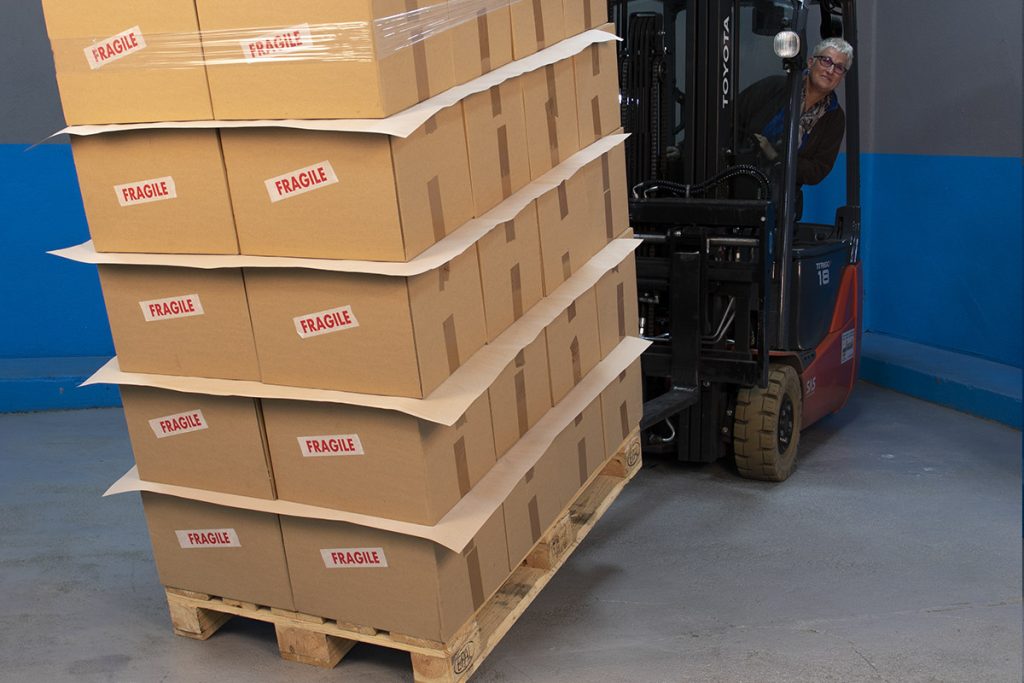
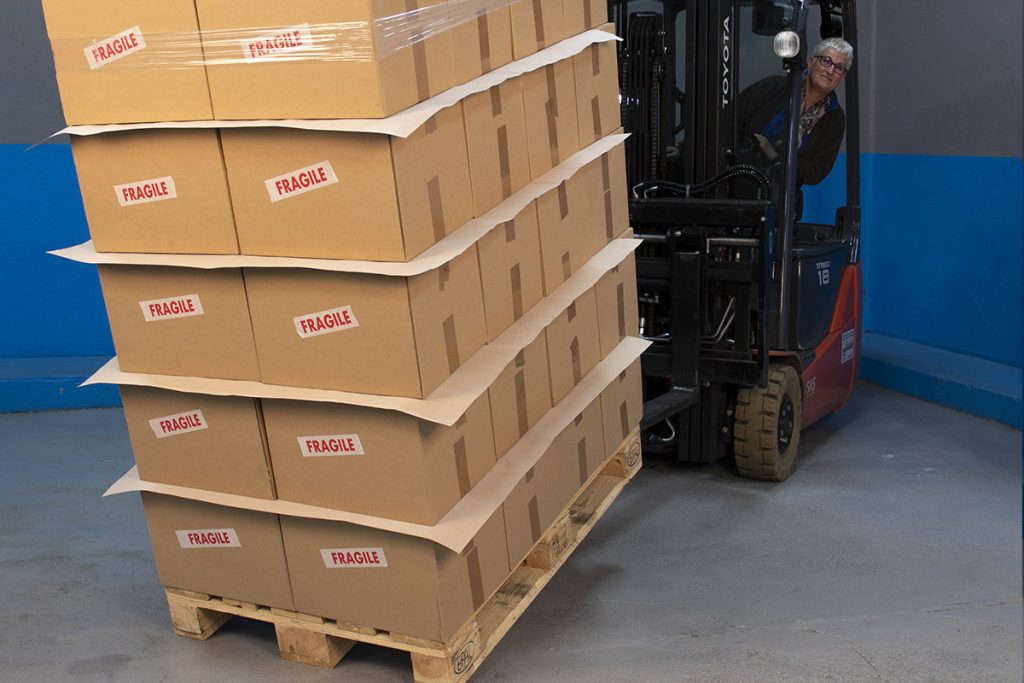
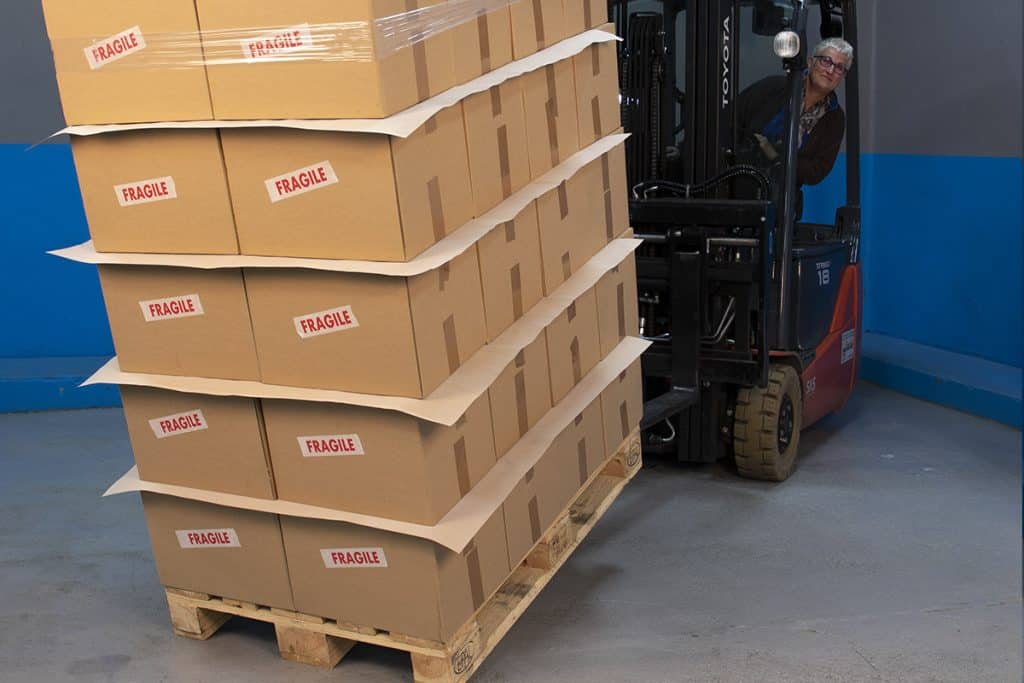
Use Anti-Slip Layer Sheets
Anti-slip layer sheets significantly increase the coefficient of friction between product layers.
They limit horizontal movement without increasing the number of stretch film wraps.
They directly improve pallet load stability while reducing plastic stretch film consumption.
Check Pallet Quality
A warped or damaged pallet compromises the stability of the entire load unit.
Inspecting pallet condition is therefore an essential step in effective load securing.
Optimize Stretch Film Application
Stretch film should complement the pallet’s mechanical stability rather than being its sole source of load security.
A properly built pallet remains stable even before the stretch film is applied.
5- EUMOS 40509: A Powerful Tool for Logistics Improvement
The EUMOS 40509 standard is not simply a compliance requirement.
It also helps companies:
- improve pallet transportation quality;
- reduce product damage;
- lower logistics costs;
- facilitate warehouse automation;
- improve operator safety.
Today, many manufacturers use load stability testing as a key performance indicator for their palletizing processes.
Conclusion
A pallet misalignment greater than 3 cm should never be considered insignificant. It generally indicates a loss of load unit integrity and reduced load stability.
By applying the EUMOS 40509 standard, manufacturers have a recognized method for evaluating pallet load stability and continuously improving load securing.
The use of anti-slip layer sheets, regular pallet alignment checks, and load stability testing help reduce damage, secure pallet transportation, and ensure load units comply with the requirements of modern logistics.
A stable pallet is the foundation of proper load securing.

Our team helps you find the solution that meets your needs.