


















How to reduce MSDs among logistics operators?
- Karine Morel
- [wpcode id="48710"]
Table of content
Reducing MSDs first requires eliminating unnecessary movements. In intralogistics, this means in particular avoiding wrapping and then unwrapping, or strapping and then removing the straps from the same pallet several times.
Musculoskeletal disorders affect the muscles, tendons and joints. They often affect the back, shoulders, elbows and wrists.
In 2024, they accounted for 88% of occupational diseases in France. Manual handling also caused 50% of workplace accidents, according to the French Health Insurance Occupational Risks.
In a warehouse, several levers can be used to reduce risks: eliminate unnecessary tasks, improve the workstation, use mechanical aids and strengthen pallet stability.
To learn more about logistics, consult our guide on logistics
1- Why are MSDs so common in logistics?
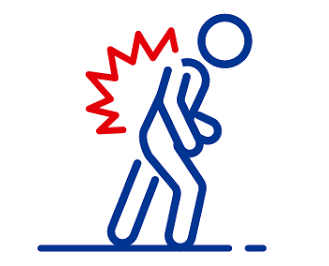
Order pickers and logistics operators perform many physically demanding tasks :
- lifting or moving heavy loads;
- pushing or pulling pallets;
- working close to the floor or with their arms raised;
- walking around a pallet to wrap it;
- manually strapping a pallet;
- repositioning packages that have slipped;
- rebuilding an unstable pallet.
These repetitive movements put strain on the back and upper limbs. Risks increase with the weight of the products, the pace of work and the duration of the effort.
Load instability adds even more tasks. Operators have to reposition packages, add film or rebuild part of the pallet.
An operator should never try to hold a falling load. The area must be secured and the pallet handled again using suitable equipment.
2- Manual wrapping and strapping: what are the risks?
Manual wrapping requires the operator to walk around the pallet. They have to bend down, stand up and stretch the film with their arms.
Manual strapping can also require pulling forces. The difficulty depends on the equipment, body position and number of pallets prepared.
Film and strapping remain necessary in many transport operations. The aim is not to eliminate them in every case. Above all, it is important to avoid using them several times for the same pallet during the logistics process.
3- What actions can reduce MSDs in logistics?
1. Eliminate unnecessary movements
The first lever is to remove tasks that do not add value.
In intralogistics, a pallet may be wrapped for an internal movement and then unwrapped at the next stage. It may also be strapped, unstrapped and strapped again before shipment.
These operations multiply:
- movements around the pallet;
- bending and twisting of the back;
- efforts related to manual strapping;
- repetitive movements;
- film and strapping consumption;
- packaging waste.
Each stage of the logistics chain should therefore be analysed. This analysis makes it possible to distinguish the securing required for transport from the temporary securing used in the warehouse.
A simple management system can track the number of wrapping operations, rework operations and damaged pallets. This data helps implement concrete actions.
2. Improve the workstation
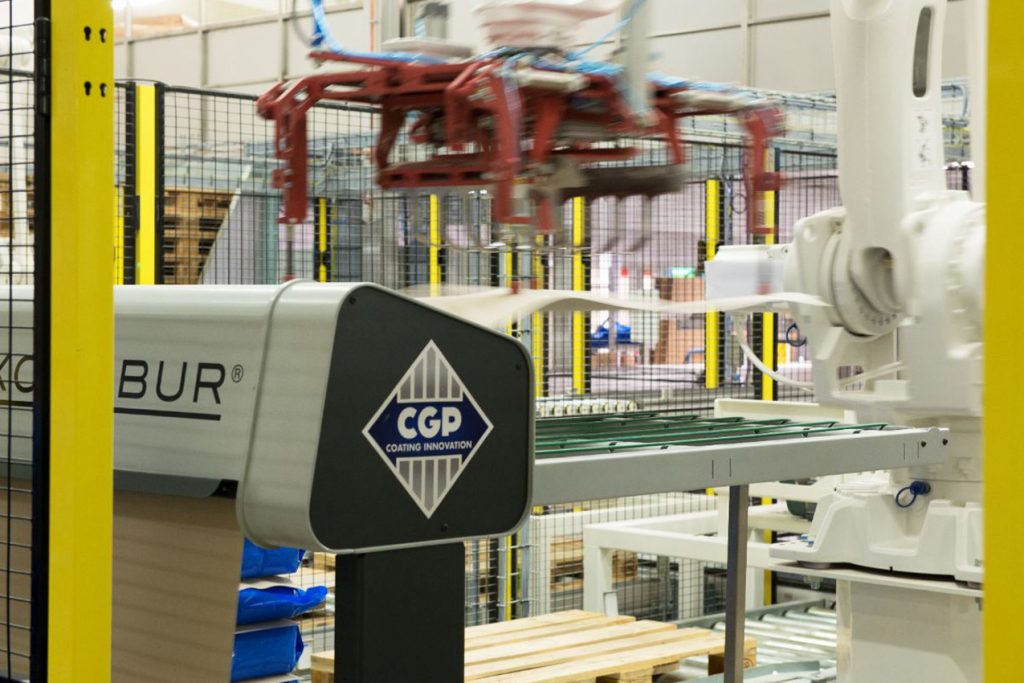
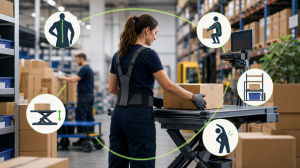
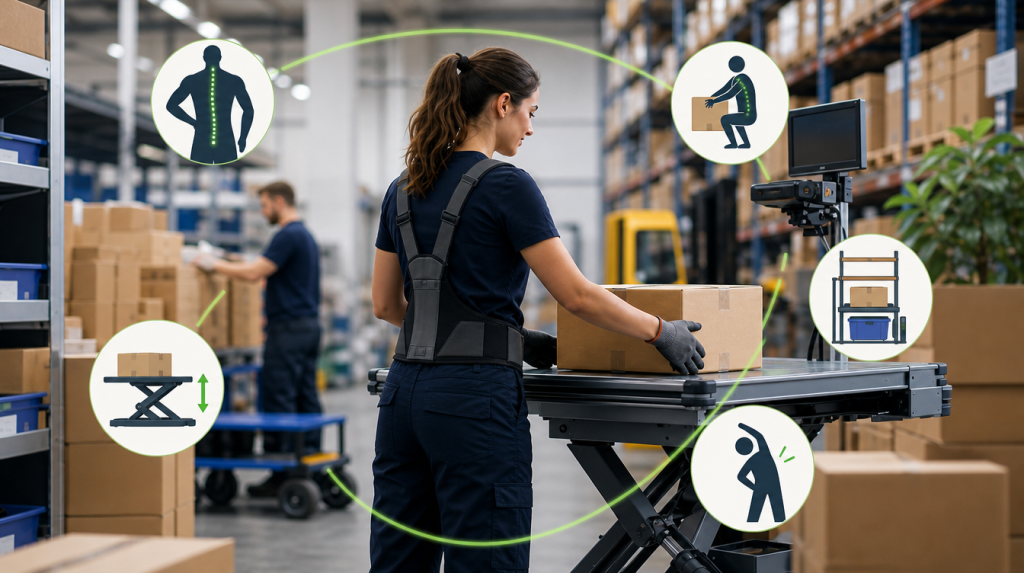
Ergonomics in logistics must be adapted to the actual work being performed. A lifting table can keep products at the right working height. A conveyor, palletiser or cobot can reduce the need to carry heavy loads.
Order pickers should be involved in this approach. They know the movements they perform and the difficulties they encounter.
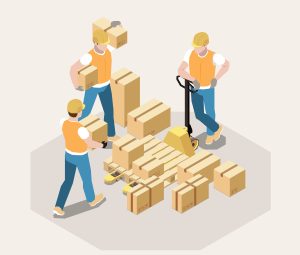
3. Improve the pallet layout
A well-built pallet requires fewer corrections. The following factors should be checked:
- weight distribution;
- package alignment;
- packaging strength;
- load height;
- position of the centre of gravity.
4. Increase friction between products
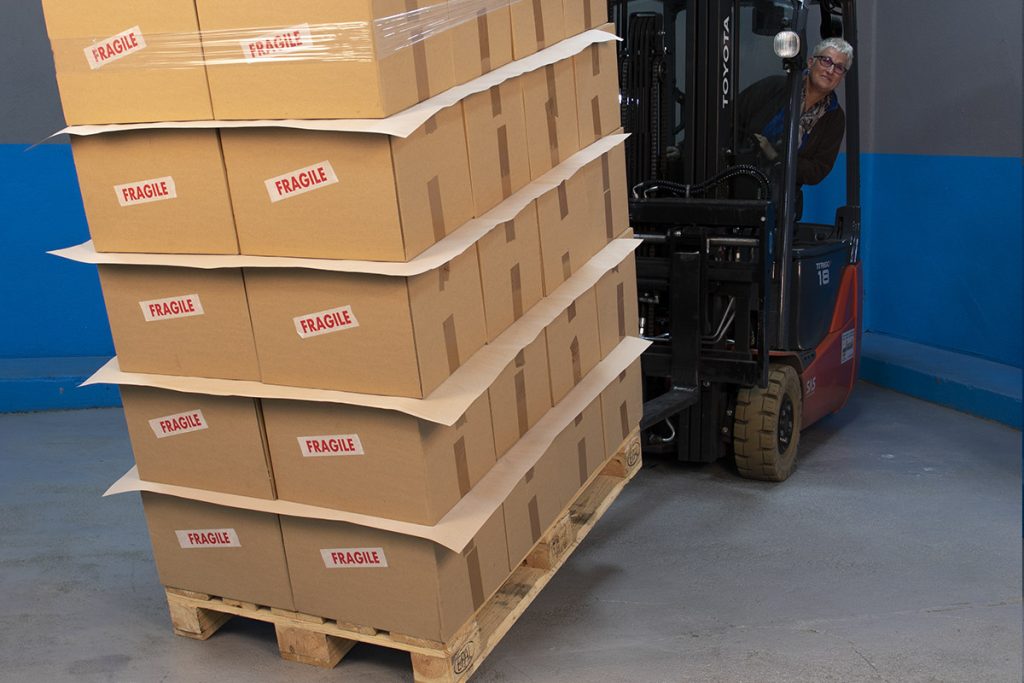
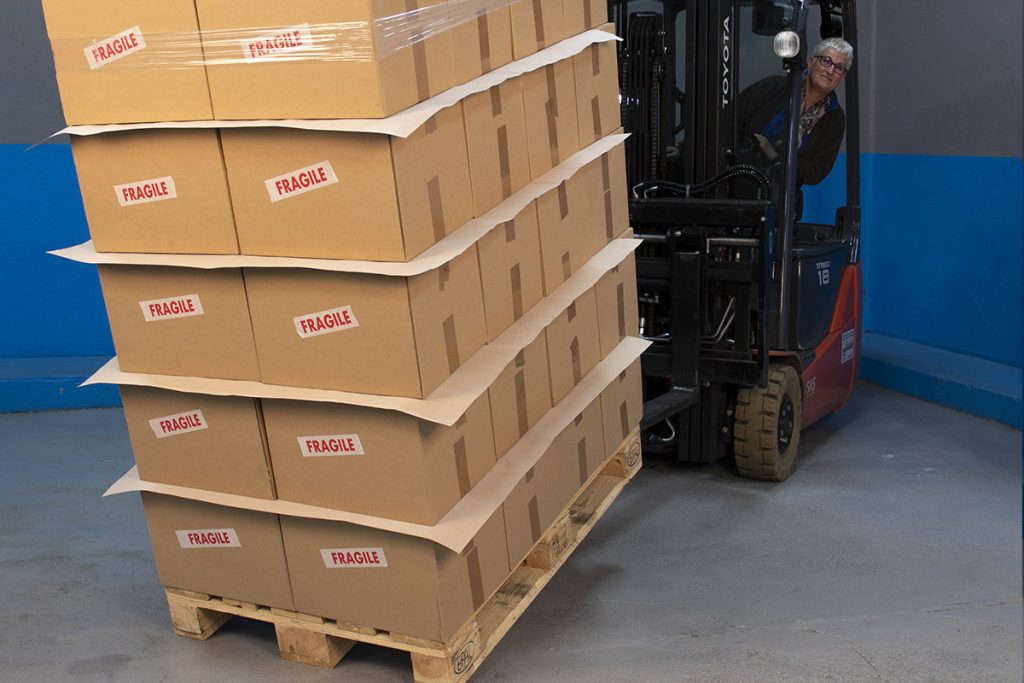
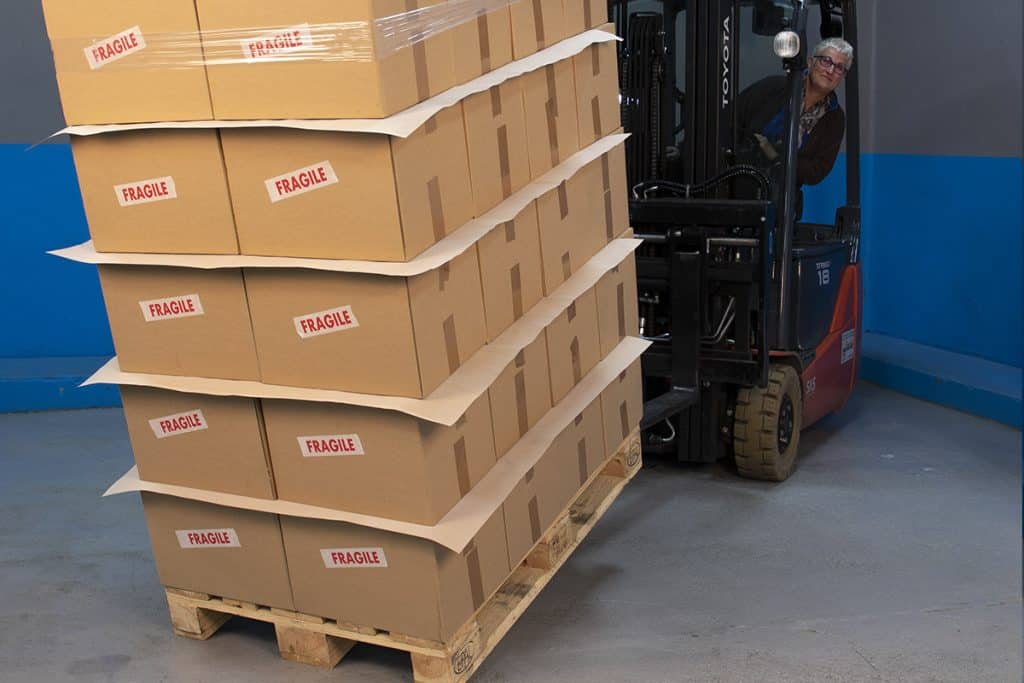
Slippery packaging reduces load cohesion. An anti-slip interlayer helps products stay in place.
This solution acts inside the pallet. It can limit manual corrections without adding heavy reinforcement.
4- How can the CGP COMBO Solution help?
The CGP COMBO Solution combines three products to ensure load stability:
- STABUSTOP® stabilises the first layer;
- STABULON® increases friction between products;
- STABUSTRAP® provides temporary load securing.
This combination acts at three levels. It can reduce slipping, certain manual rework operations and repetitive movements in logistics.
STABUSTOP® stabilises the base
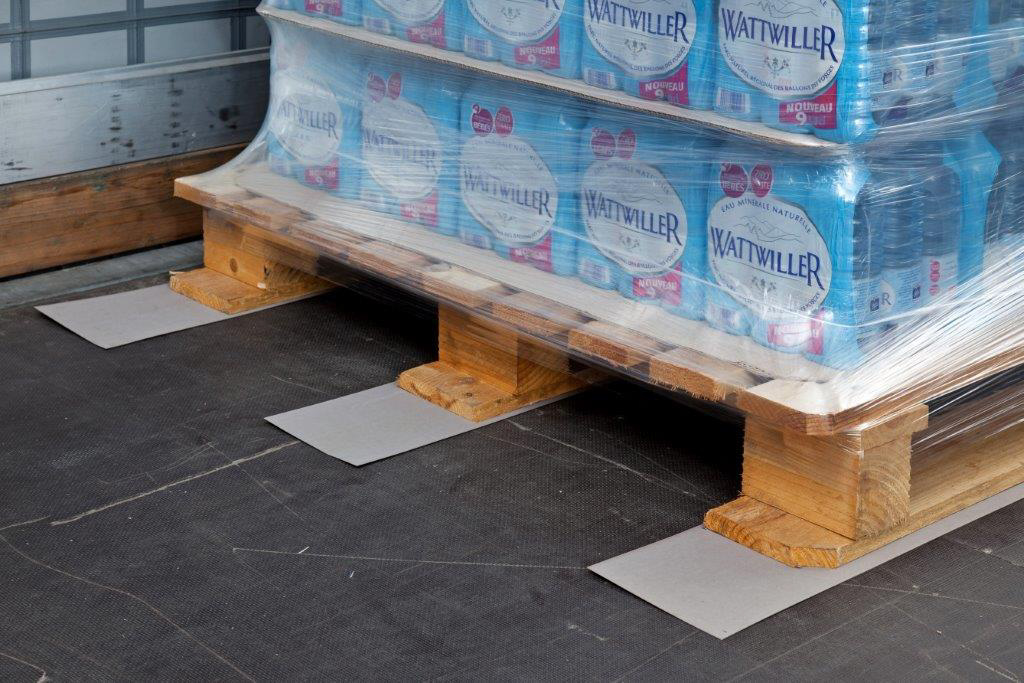
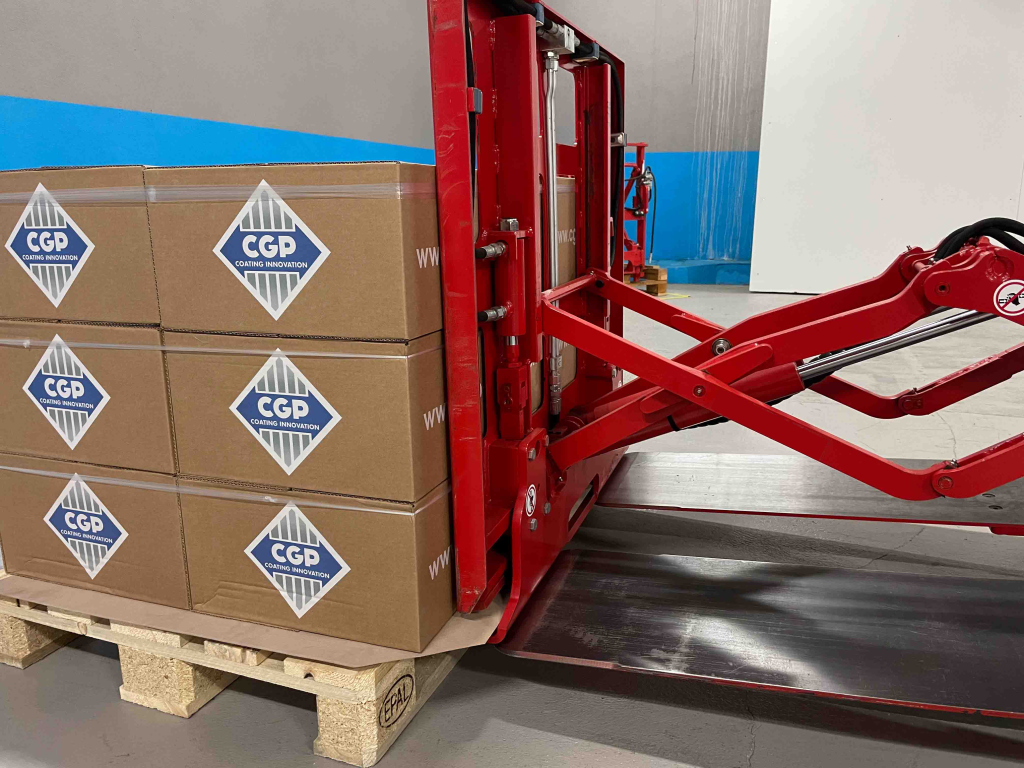
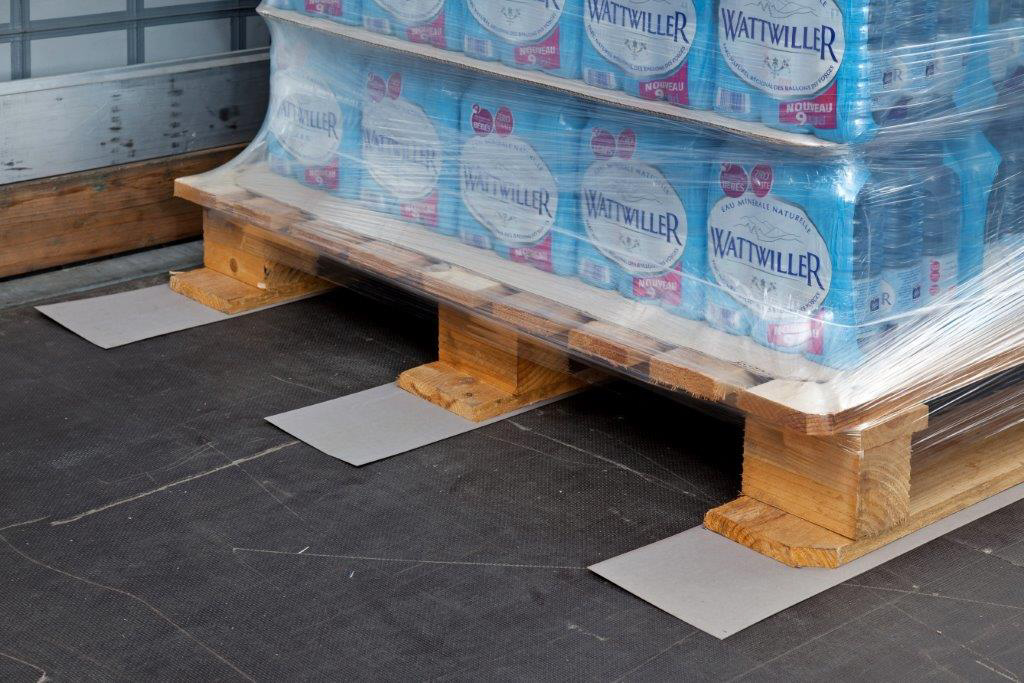
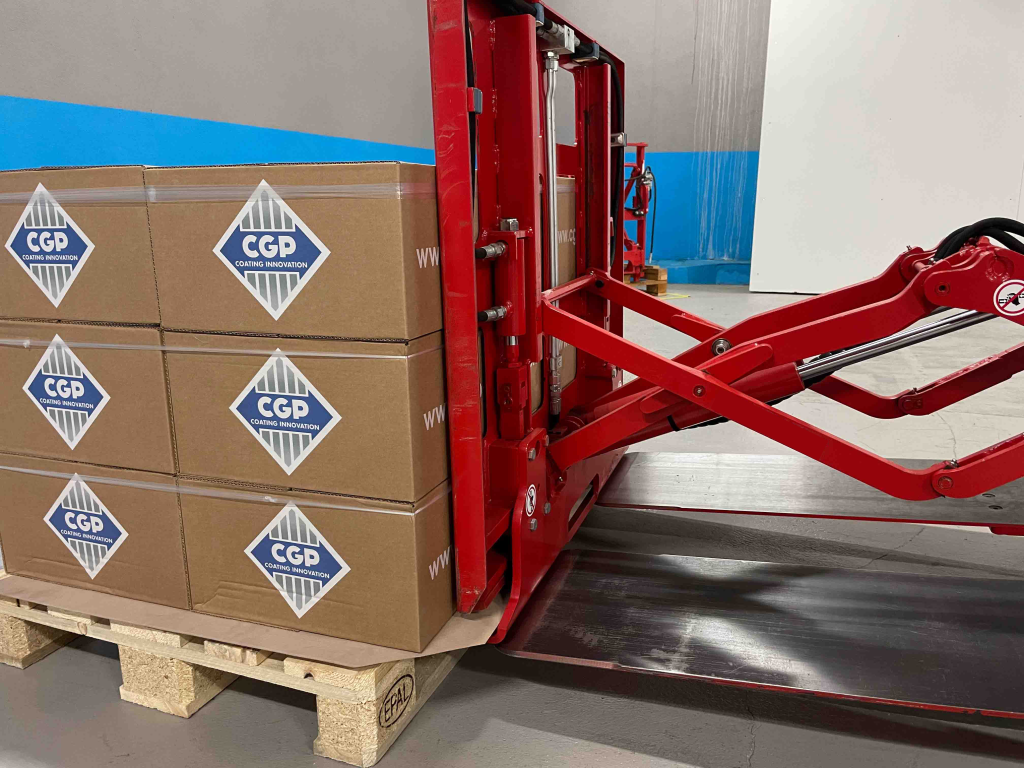
STABUSTOP® is placed on the pallet, underneath the first layer of products. Its anti-slip surface limits the movement of packages at the base.
A stable first layer improves the cohesion of the entire pallet.
STABULON® limits slipping
STABULON® is placed between the layers. It increases friction and helps packages remain in position.
It can therefore reduce manual corrections and pallets that need to be rebuilt. The result depends on the packaging, weight and pallet layout.
STABUSTRAP® simplifies temporary securing
STABUSTRAP® is an elastic strap that is easy to apply. It secures a load during preparation, short-term storage or internal movements.
It can eliminate certain film wrapping operations or temporary strapping operations. The operator no longer needs to wrap and unwrap the same pallet several times.
STABUSTRAP® does not always replace the final packaging intended for transport. A trial should confirm its suitability for each application.
5- How can the results be measured?
Before implementing the COMBO Solution, the following should be measured:
- the number of film wraps;
- manual strapping operations;
- preparation time;
- corrections made to pallets;
- incidents during transport flows;
- the amount of waste produced.
The same measurements are taken during the trial. This comparison makes it possible to assess the effects on the workstation and the logistics process.
Operators’ feedback should also be taken into account. It helps identify actual improvements and remaining difficulties.
Frequently asked questions
Is a stable pallet enough to prevent MSDs?
No. Better stability can reduce certain rework operations. Prevention must also address heavy loads, tools, working height and work rates.
Does STABUSTRAP® replace stretch film?
It can replace certain film wraps used for temporary securing. However, it does not always replace the final packaging required for transport.
Are anti-slip interlayers suitable for all loads?
No. Their choice depends on the products, packaging and pallet weight. The conditions encountered in the supply chain must also be studied.
Conclusion
Reducing MSDs among logistics operators starts with eliminating unnecessary movements. Wrapping and then unwrapping, or strapping a pallet several times, increases physical strain without always improving the flow.
The CGP COMBO Solution provides a solution adapted to certain intralogistics flows. STABUSTOP®, STABULON® and STABUSTRAP® work together to stabilise the load and limit rework operations.
A trial in the workplace makes it possible to measure the movements avoided, time savings and reduction in waste.
Key takeaways
- The first action is to eliminate movements that do not add value.
- Manual pallet handling should be limited.
- A stable load requires fewer corrections.
- The COMBO Solution acts at the base, between the layers and around the pallet.
- Each solution should be tested under real-life conditions.

Our team helps you find the solution that meets your needs.