




















Stabilizing a Pallet: Don’t Confuse Falling and Sliding
- Karine Morel
- [wpcode id="48710"]
Table of content
Load stabilization is essential in logistics and transportation to ensure the safety of delivered goods. It helps prevent accidents and damage during transport.
However, it is crucial to distinguish between two main risks: tipping (falling) and sliding. Each of these phenomena requires specific stabilization techniques to be effectively controlled.
This article explores the differences between these two types of instability and proposes appropriate solutions for each situation.
1- Understanding the Difference: Falling vs. Sliding
A- Falling – Tipping

A pallet tips over when the center of gravity of the load moves outside the pallet’s support surface.
As long as the weight of the load remains within the pallet base, the stack remains stable.
If the center of gravity moves beyond the edge, the load loses balance and tips over.
The higher the center of gravity, the more sensitive the pallet is to movement. Poorly distributed loads, heavy items placed on top, or irregular stacking greatly increase the risk of tipping.
https://packcalc.com/tools/pallet-load-stability
During transport, various forces can exacerbate this phenomenon: braking, acceleration, turning, or vibrations. These movements shift the load and may cause pallet imbalance.
B- Sliding

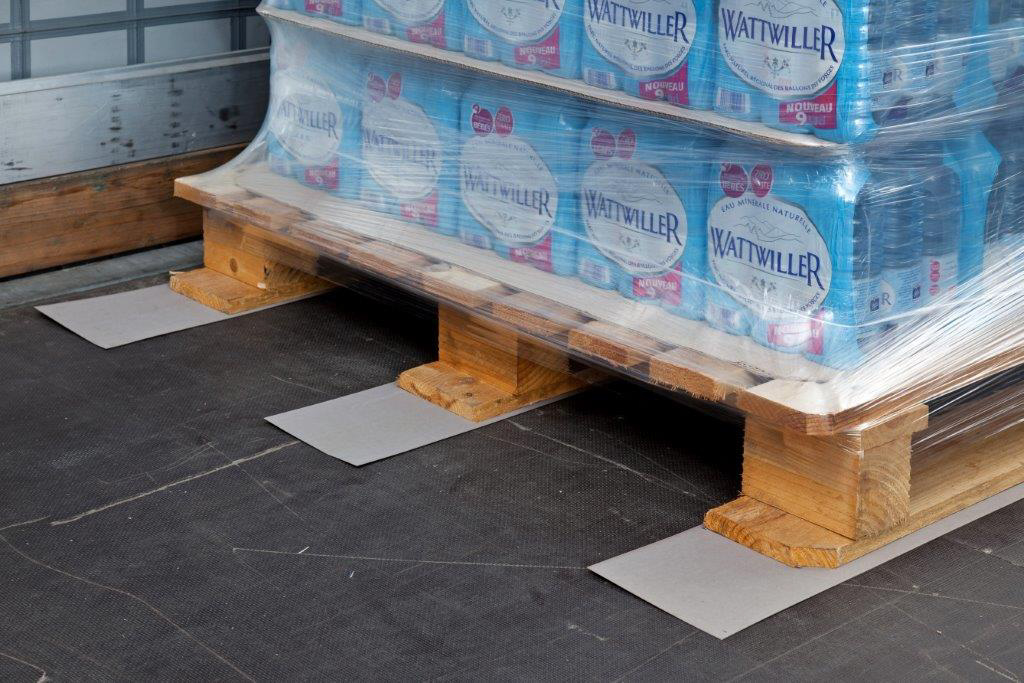
Sliding occurs when stacked items move horizontally relative to each other, or when the entire pallet moves on the floor or vehicle surface.
This phenomenon typically arises when the friction between contact surfaces is insufficient to hold the items in place.
Sliding can be caused by multiple factors: smooth surfaces, lack of grip between contact surfaces, or vibrations during transport.
In such situations, the forces generated by vehicle movement exceed friction capacity, causing the stacked items or pallet to shift.
2- Stabilization Techniques to Prevent Tipping
To limit pallet load tipping, several stabilization techniques can be implemented.
First, it is essential to distribute weight correctly on the pallet. Heavy items should be placed at the bottom, while lighter items go on top. This arrangement maintains better load balance and reduces the risk of falling or tipping.
It is also important to ensure that boxes or products are perfectly aligned. Accurate alignment prevents uneven pressure points that could destabilize the stack and cause tipping.
Using corner protectors and edge guards reinforces the pallet’s corners and helps keep boxes in place. These elements provide additional structural stability and limit movements that could cause products to tip.
Finally, load security can be enhanced using stretch film, shrink wrap, or our Stabustrap® pallet strap. These applications bind the products together and improve load integrity.
Pallet straps also provide additional fastening, particularly useful for heavy or irregularly shaped loads, keeping products firmly in place and reducing the risk of tipping.
Conclusion
Load stabilization is a crucial discipline in logistics, requiring a clear understanding of tipping and sliding risks.
These two phenomena involve different mechanisms and must be addressed with appropriate stabilization techniques.
By implementing solutions tailored to each type of instability, it is possible to significantly improve load safety and logistical efficiency. Using quality materials, proper weight distribution, and appropriate stabilization equipment helps limit product movement during transport.
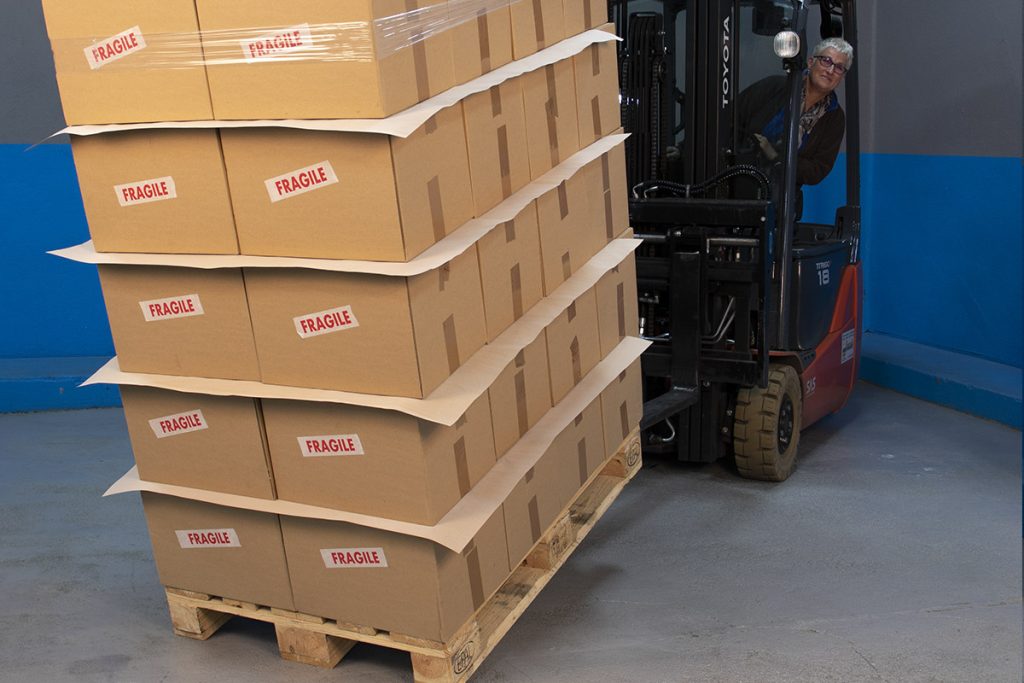
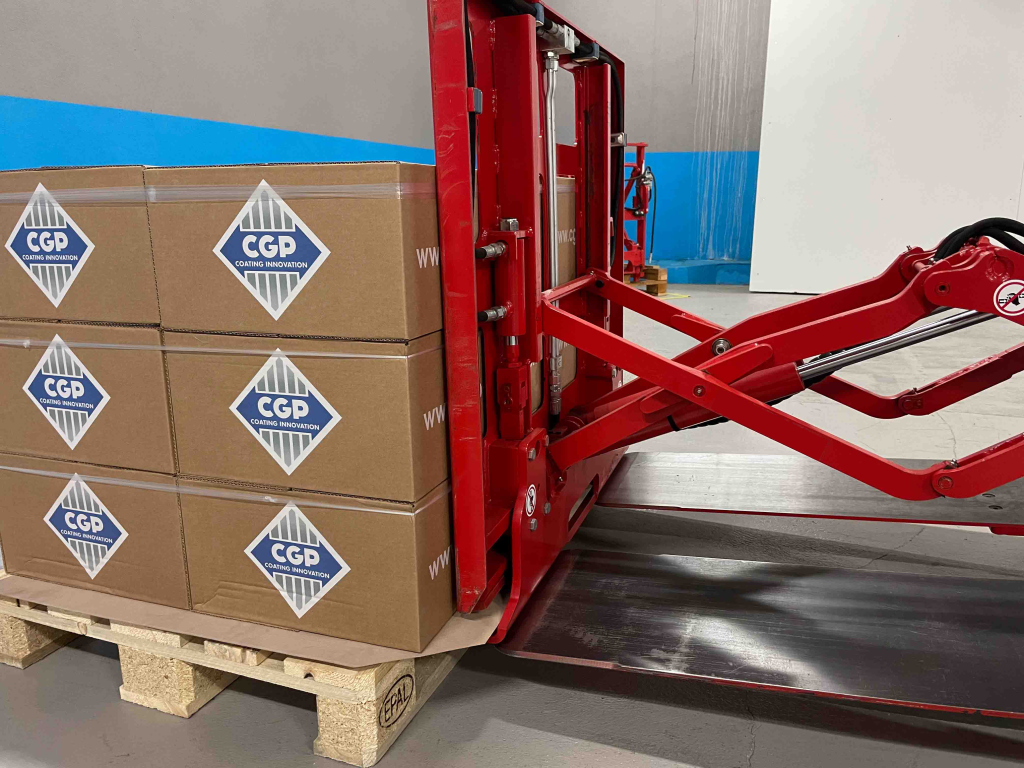
Among these solutions, using anti-slip sheets between product layers increases friction and reduces sliding risks within the pallet, reinforcing overall load stability.
These best practices help secure goods throughout the supply chain and ensure they arrive at their destination in optimal condition.


Our team will help you find the solution that meets your needs.