





Question of the Month – Damien Terres
- Karine Morel
- [wpcode id="48710"]
Table of content
Can paper solutions really replace plastic?
Interview with Damien Terres, Product Manager Engineer – CGP Coating Innovation

In recent years, the transition toward more responsible packaging has accelerated. But behind this evolution, one question often arises among manufacturers: can paper really achieve performance levels comparable to plastic on industrial production lines?
We asked Damien Terres, Product Manager Engineer at CGP Coating Innovation.
1- Damien, what has changed the most in paper solutions in recent years?
The biggest changes have come from coating technologies and formulations.
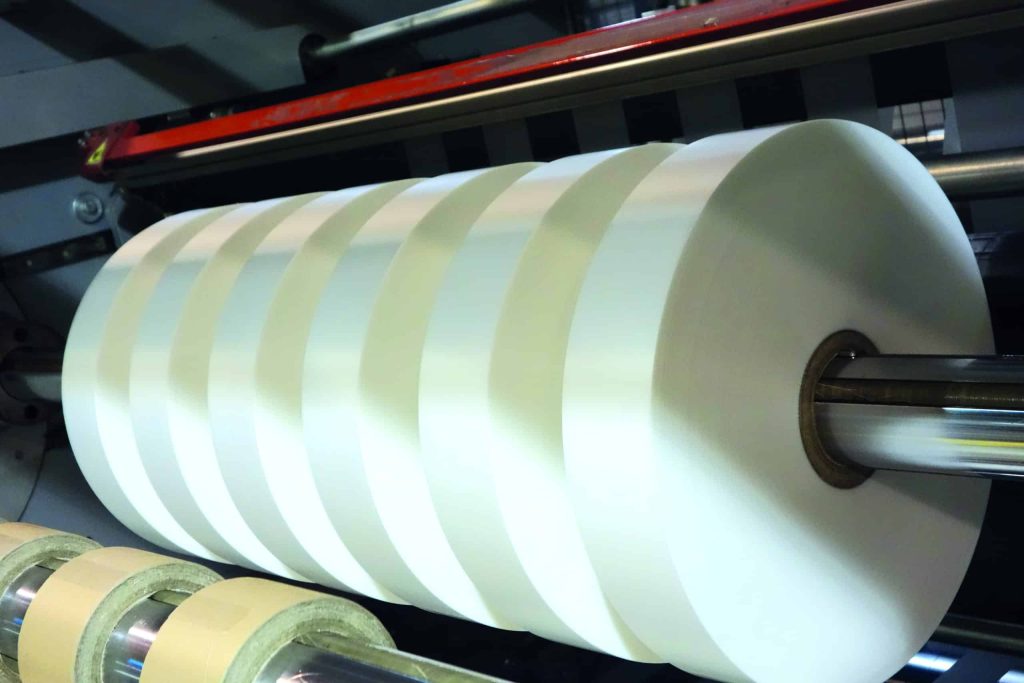
Today, thanks to paper coating, it is possible to give paper functionalities that were previously reserved for plastics: heat-sealability, resistance to moisture or grease, improved mechanical strength, and in some cases higher barrier levels suitable for certain food contact applications.
Another major improvement is industrial consistency. Materials must run on high-speed lines with stable and repeatable sealing quality. This is an area where significant progress has been made.
2- Is replacing a plastic film with paper technically difficult?
The transition from plastic to paper is now achievable. It requires technical work, but it is no longer the barrier it once was.
Paper does not behave like plastic film. It is more rigid, less elastic, and more sensitive to ambient conditions. This affects forming, folding, and sealing operations.
Several parameters must therefore be optimized:
- the paper substrate,
- stiffness,
- coefficient of friction,
- coating consistency,
- and the formulation of heat-sealable layers.
The objective is to obtain a material stable enough to run on existing machines without major modifications, enabling reliable paper packaging in industrial conditions.
3- Are paper solutions compatible with current industrial lines?
This is a key point.
At CGP, we develop transition packaging solutions by integrating this constraint from the very beginning. The goal is to allow manufacturers to move from plastic to paper without heavy investment in new equipment.
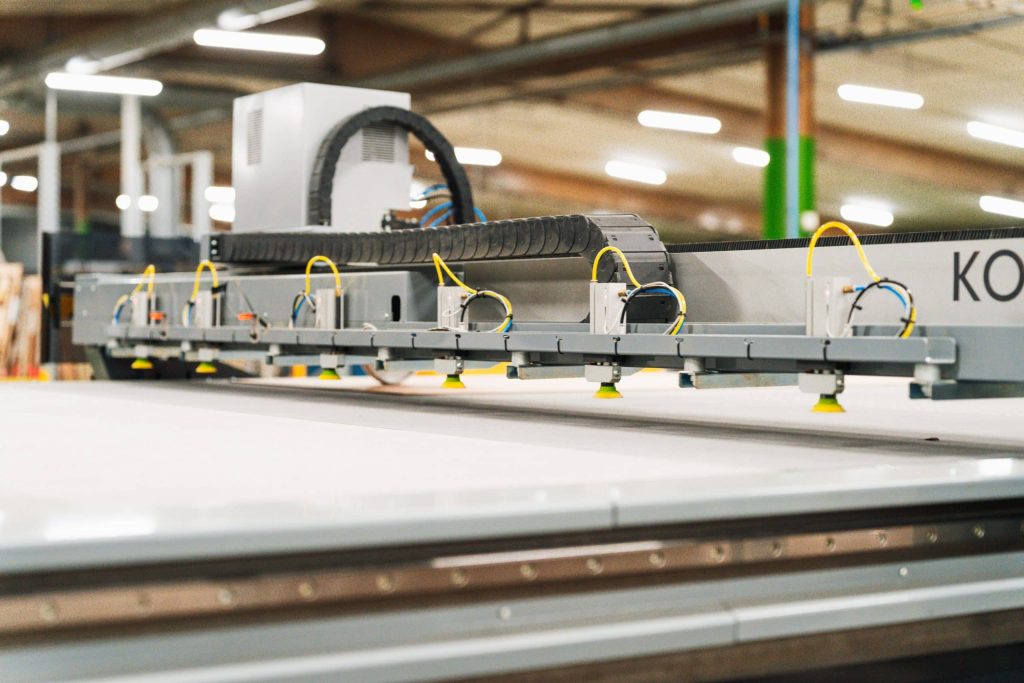
In most cases, only machine adjustments are required, such as temperature, pressure, or sealing time. Industrial trials help validate these parameters before production starts.
4- What is CGP’s role in this transition?
Our role goes beyond supplying a material.
We support customers from the very beginning of the project: constraint analysis, trials, technical validation, and process adjustments.
Each application is different. The product, line speed, logistics conditions, or regulatory requirements—including those related to food contact—influence the choice of the most suitable packaging solutions.
This support is essential to secure the industrial scale-up of paper packaging.
5- Has the perception of plastic packaging really changed?
Yes, clearly.
Plastic remains a high-performance material, but it is now also perceived as an environmental issue, particularly in single-use packaging.
Today, brands, manufacturers, and retailers increasingly integrate environmental impact into their decisions. European regulations are also accelerating this evolution.
What is new is that this awareness now translates into concrete projects and real investments.
6- Will plastic disappear in the coming years?
No, plastic will not disappear.
It will remain essential for certain highly demanding applications, particularly where very high barrier performance is required.
However, its use will increasingly be limited to these necessary applications.
Paper, thanks to ongoing technical innovations in paper coating and material engineering, will continue to expand in many segments. The industry is moving toward a more rational approach to material selection, based on functional needs and overall environmental impact.
7- What is accelerating this transition today?
Three factors play a major role.
- Regulations set the framework.
- Consumers express strong expectations.
- And brands trigger investments and concrete changes.
In the long term, it is often industrial decisions made by brands that have the greatest impact, because they shape material choices and supply chains in a lasting way.
Conclusion
Technical progress achieved in recent years has significantly changed the role of paper in packaging.
As Damien Terres points out, the question is no longer whether paper can work, but in which applications it is most relevant, and how to effectively support manufacturers in the transition toward more sustainable packaging solutions.


Our team will help you find the solution that meets your needs.